

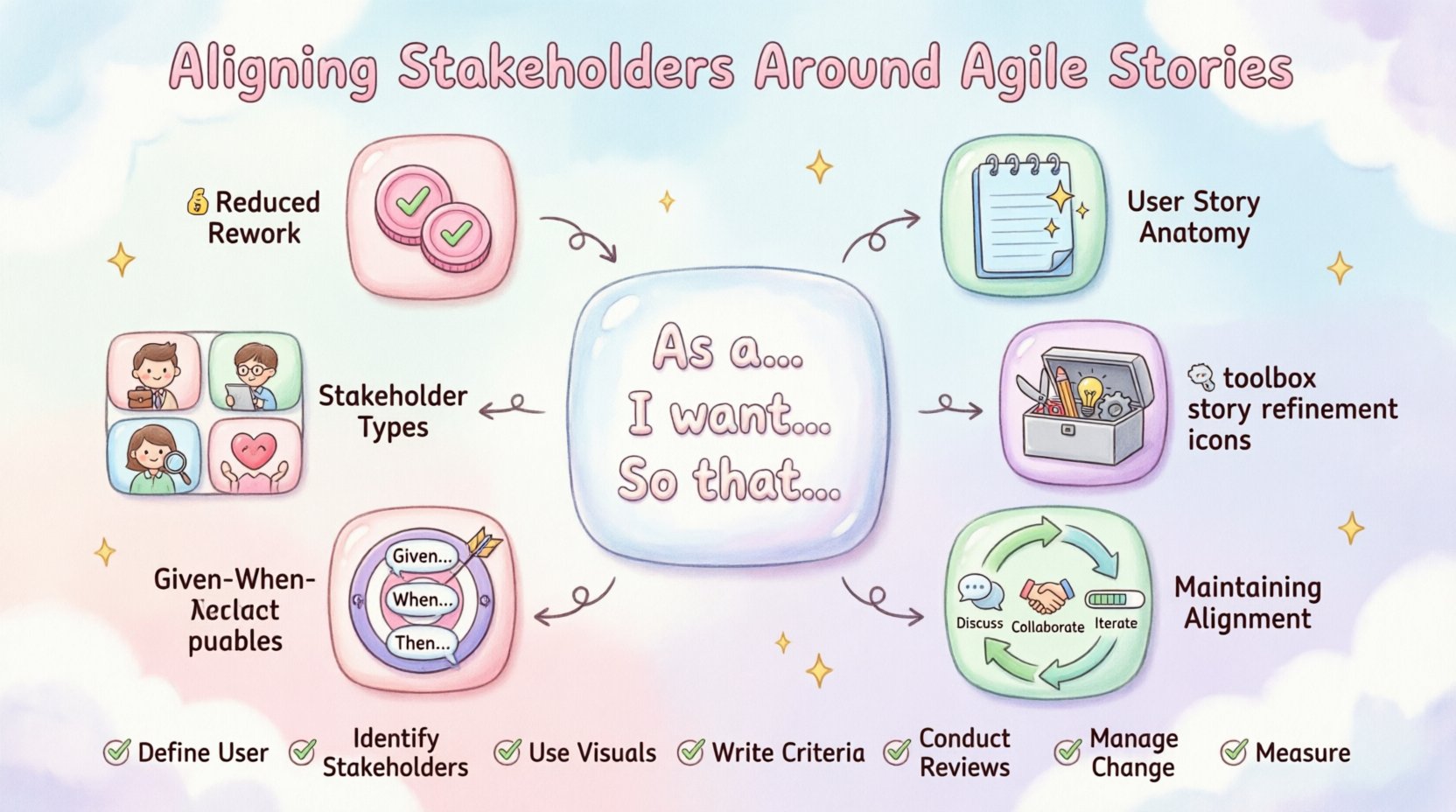
Successful delivery in an agile environment depends less on the speed of coding and more on the clarity of intent. When stakeholders and development teams operate with divergent understandings of a user story, the result is often rework, missed deadlines, and frustrated teams. This article explores how to align stakeholders around agile stories effectively. We will examine the mechanics of shared understanding, the importance of acceptance criteria, and strategies for maintaining alignment throughout the lifecycle of a work item.
Alignment is not a one-time event. It is a continuous process of communication, validation, and adjustment. By treating the user story as a contract of understanding rather than a mere task assignment, teams can reduce friction and increase value delivery.
Why Alignment Matters in Agile Delivery 💸
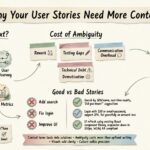
Misalignment is expensive. When a stakeholder envisions a feature differently than the development team, the cost of change rises exponentially as the project progresses. Addressing these discrepancies early saves time, budget, and morale.
- Reduced Rework: Clear agreement on what constitutes “done” prevents the need to build and then rebuild.
- Faster Feedback Loops: When expectations are set, testing becomes more targeted, and feedback is more actionable.
- Improved Trust: Stakeholders feel heard when their input shapes the story, and developers feel supported when their constraints are understood.
- Predictable Outcomes: Alignment leads to more accurate estimates and reliable release schedules.
Consider the scenario where a business leader requests a “dashboard.” Without specific alignment, the team might build a static report, while the stakeholder expected an interactive analytics tool. Both parties used the same word, but the meaning differed. Alignment bridges this semantic gap.
The Anatomy of a User Story 📝
A user story is a placeholder for a conversation. It is not a specification document, but it requires enough detail to initiate that conversation. To align stakeholders, the story must be structured in a way that invites dialogue.
Standard Structure
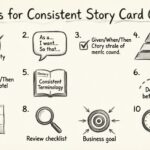
Most teams adopt a standard template to ensure consistency. This template includes:
- Role: Who is the user? (e.g., “As a registered customer…”)
- Need: What is the goal? (e.g., “…I want to reset my password…”)
- Benefit: Why does it matter? (e.g., “…so that I can regain access quickly.”)
Expanding the Narrative
While the standard structure sets the stage, alignment requires going deeper. The story needs context that explains the business value, not just the functional requirement. This helps stakeholders prioritize based on impact rather than preference.
- Contextual Background: What problem is being solved? Is this a new feature or a fix?
- Constraints: Are there technical or compliance limitations that affect the solution?
- Edge Cases: What happens if the user behaves unexpectedly?
By fleshing out these details collaboratively, the team ensures that the story reflects reality rather than assumption.
Identifying Key Stakeholders 👥
Not everyone who has an opinion on a project needs to be part of every story discussion. Identifying the right people is crucial for efficient alignment. Stakeholders generally fall into specific categories, each with distinct interests.
| Stakeholder Type | Primary Interest | Key Concern |
|---|---|---|
| Business Owners | ROI and Market Fit | Will this generate revenue or save costs? |
| End Users | Usability and Function | Is it easy to use and does it solve my problem? |
| Technical Leads | Maintainability and Architecture | Does this fit our system design and standards? |
| Compliance/Legal | Risk and Regulation | Are we adhering to laws and policies? |
| Support Teams | Operational Feasibility | Can we support this feature after launch? |
Understanding these perspectives helps in tailoring the conversation. A business owner cares about the “why,” while a technical lead cares about the “how.” Aligning stakeholders involves acknowledging these differences and finding the common ground where value is created.
Techniques for Collaboration 🛠️
Alignment does not happen by accident. It requires deliberate practices and structured interactions. Below are proven methods to foster shared understanding.
1. Story Refinement Sessions
Refinement, often called grooming, is a dedicated time to discuss upcoming stories before they enter a sprint. This is not about committing to the work, but about ensuring clarity.
- Invite the Right People: Include the product owner, a developer, and a key stakeholder representative.
- Visualize the Flow: Use diagrams or whiteboards to map out user journeys.
- Ask “What If”: Probe edge cases to uncover hidden requirements.
- Estimate Complexity: High-level sizing helps stakeholders understand the effort involved.
2. The Three Amigos Model
This technique involves three perspectives meeting on a single story:
- Business: Represents the stakeholder needs.
- Development: Represents the technical feasibility.
- Quality Assurance: Represents the testing and verification needs.
When these three agree on a story, the likelihood of misalignment drops significantly. It ensures that the feature is valuable, buildable, and testable.
3. Prototyping and Wireframing
Words are often ambiguous. Visuals are concrete. Creating low-fidelity sketches or wireframes allows stakeholders to see the proposed solution before a single line of code is written. This reduces the risk of building the wrong thing.
- Focus on Layout: Show where elements go, not final styling.
- Interactive Mockups: If possible, demonstrate clicks and transitions.
- Feedback Loop: Gather feedback immediately while the idea is fresh.
4. User Acceptance Testing (UAT) Early
Involve stakeholders in the validation process before the final release. This can be done with a demo of the completed work. Seeing the actual product in action often reveals gaps in understanding that were invisible in the documentation.
Crafting Clear Acceptance Criteria 🎯
Acceptance criteria are the conditions that must be met for a user story to be considered complete. They act as the contract between the stakeholder and the team. Vague criteria lead to subjective judgments, which cause delays.
Characteristics of Good Criteria
- Specific: Avoid words like “fast,” “user-friendly,” or “robust.” Use measurable terms.
- Testable: There must be a clear way to verify if the condition is met.
- Unambiguous: The criteria should have only one interpretation.
- Relevant: Focus on the value delivered, not internal implementation details.
Using the Given-When-Then Format
This structure, often associated with behavior-driven development, helps clarify logic:
- Given: The initial context or state.
- When: The action taken by the user.
- Then: The expected outcome.
Example:
- Given: The user has a valid login session.
- When: The user clicks the “Logout” button.
- Then: The user is redirected to the home page and the session is invalidated.
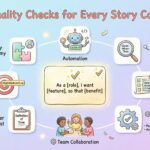
Refinement Checklist
| Checklist Item | Question to Ask |
|---|---|
| Clarity | Is this statement open to interpretation? |
| Completeness | Does this cover negative paths (errors)? |
| Feasibility | Can we verify this within the sprint? |
| Value | Does this criteria directly support the user benefit? |
Resolving Conflicts Constructively ⚖️
Disagreement is natural in collaborative work. Stakeholders may have conflicting priorities, or technical constraints may prevent a requested feature. The goal is not to avoid conflict, but to manage it productively.
Strategies for Resolution
- Focus on Goals: Step back from the specific solution and discuss the underlying business goal. Often, there are multiple ways to achieve the same goal.
- Trade-off Analysis: Present options with clear pros and cons. Show the impact on time, cost, and quality.
- Decentralized Decision Making: Empower the team closest to the work to make technical decisions, while stakeholders decide on priority.
- Documentation: Record the decision and the rationale. This prevents the same issue from resurfacing later.
Managing Scope Creep
Scope creep is the silent killer of alignment. It occurs when small changes accumulate without formal review. To prevent this:
- Define Boundaries: Clearly state what is in scope for the current cycle.
- Change Control: New requests should be evaluated and added to the backlog for future consideration, rather than disrupting current work.
- Regular Check-ins: Ensure stakeholders know the current status so surprises are minimized.
Maintaining Alignment Over Time 🔄
Alignment is dynamic. Requirements evolve, market conditions change, and new information emerges. A snapshot of agreement today may be obsolete tomorrow. Continuous engagement is required.
Demonstrations and Reviews
Regularly showing progress keeps stakeholders connected to the product. These sessions are not just for reporting status; they are for validating direction.
- Frequency: Hold these sessions at the end of every iteration or sprint.
- Environment: Use a staging environment that mimics production to ensure accuracy.
- Feedback Collection: Actively solicit feedback on what works and what does not.
Retrospectives
While retrospectives are often internal, the insights gained can be shared with stakeholders. Discussing process improvements helps build confidence in the team’s ability to deliver value consistently.
Metrics for Alignment
How do you know if you are aligned? Look for these indicators:
- Definition of Done: Are items consistently marked as complete without rework?
- Stakeholder Satisfaction: Do stakeholders feel their needs are being met?
- Velocity Stability: Is the team’s delivery rate consistent, or are there frequent disruptions?
- Change Request Volume: Are there fewer mid-sprint changes than before?
Common Pitfalls to Avoid 🚫
Even with the best intentions, teams can drift out of alignment. Awareness of common traps helps prevent them.
- Assuming Silence Means Agreement: Just because a stakeholder does not object during a meeting does not mean they agree. Explicit confirmation is needed.
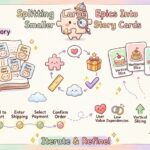
- Overloading Stories: Trying to fit too much into one story makes it hard to understand and validate.
- Ignoring Non-Functional Requirements: Security, performance, and accessibility are often overlooked until late in the process.
- Skipping the “Why”: Focusing only on the “what” leads to building features that do not solve the underlying problem.
Building a Culture of Shared Ownership 🏗️
Ultimately, alignment is cultural. It requires a mindset where everyone feels responsible for the success of the product. This goes beyond process; it is about relationships.
- Transparency: Share information openly. Do not hide problems.
- Empathy: Understand the pressures stakeholders face and the constraints developers deal with.
- Shared Language: Develop a glossary of terms so everyone uses words consistently.
- Celebration: Acknowledge when alignment leads to success. Reinforce the behavior.
Summary of Best Practices ✅
To summarize the path to alignment, consider this consolidated list of actions:
- Define the User: Ensure every story starts with a clear persona.
- Identify Stakeholders: Know who needs to be involved in the conversation.
- Use Visuals: Sketch, diagram, or prototype to clarify intent.
- Write Criteria: Create testable conditions for completion.
- Conduct Reviews: Hold regular sessions to validate progress.
- Manage Change: Process new requests formally to protect scope.
- Measure: Track metrics that indicate understanding and delivery quality.
When these practices are applied consistently, the friction between business needs and technical execution diminishes. The team moves from a state of negotiation to a state of partnership.
Final Thoughts on Sustainable Alignment 🌱
Achieving alignment is not about finding a perfect formula that works for every organization. It is about committing to the practice of communication. It requires patience to listen, courage to ask difficult questions, and discipline to document decisions.
By treating the user story as a living document of shared understanding, teams can navigate complexity with confidence. The result is not just software that works, but software that matters. Stakeholders see their vision realized, and developers see their effort translated into value. This synergy is the foundation of a healthy agile practice.
Start today by reviewing your current stories. Ask your stakeholders what they think is missing. Listen to their concerns. Adjust your process to close the gaps. Alignment is a journey, not a destination, and every step brings you closer to delivering true value.