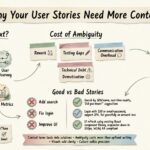


Creating user stories is often seen as a simple administrative task. However, the reality of agile development suggests that the quality of a user story directly impacts the velocity, quality, and value of the delivered software. When teams struggle with vague requirements or misaligned expectations, the result is technical debt, rework, and frustrated stakeholders. This is where structured workshops come into play. A well-facilitated session can transform ambiguous ideas into actionable, testable, and valuable user stories.
This guide explores the mechanics of running effective workshops for user story creation. We will examine the preparation, the facilitation techniques, the core writing frameworks, and the methods for refining acceptance criteria. By focusing on collaboration and clarity, teams can ensure that every story represents genuine user value rather than just a feature checklist.
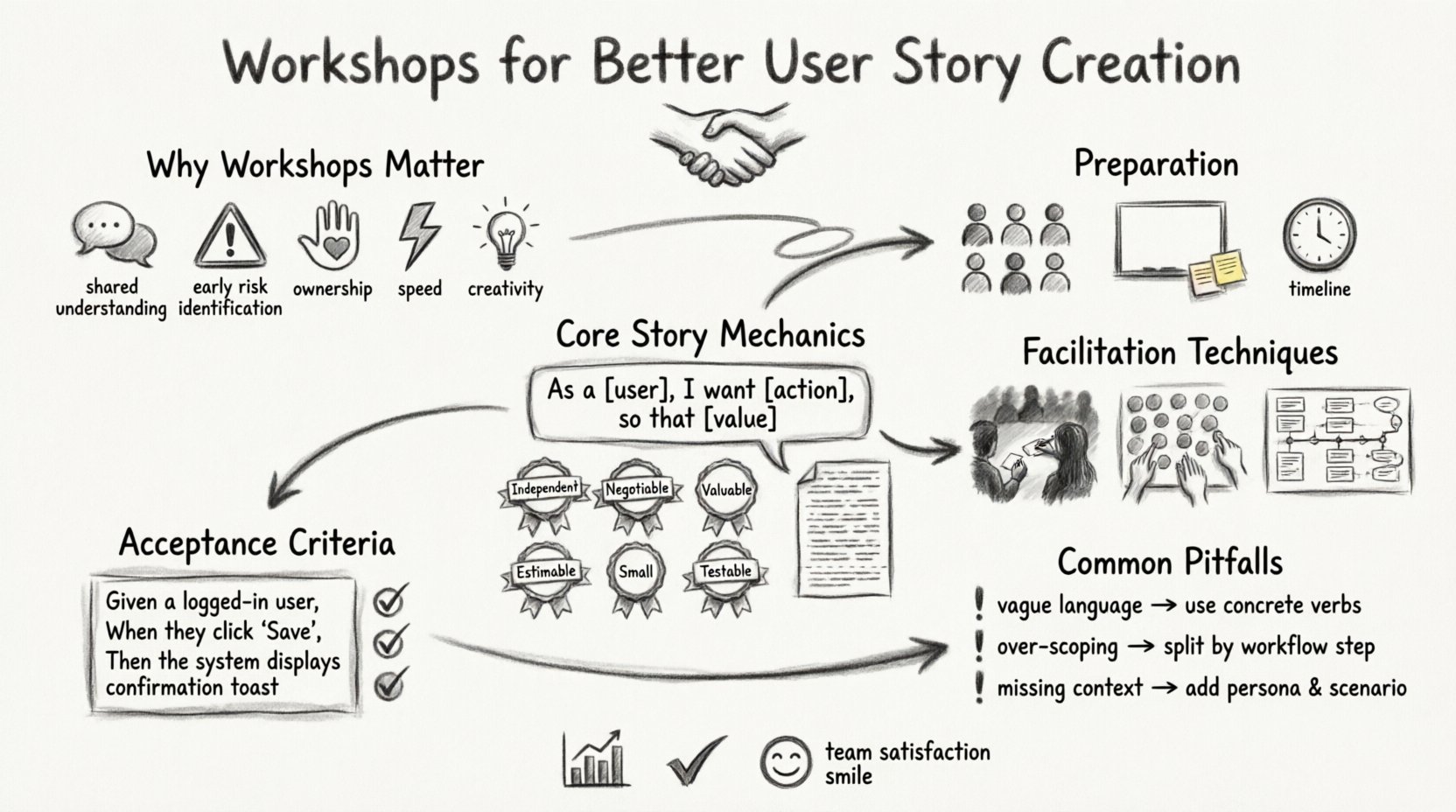
Why Workshops Matter in Agile Delivery 🤝
Writing a user story in isolation often leads to gaps in understanding. The person writing the story may not foresee technical constraints, while the developers building it might miss the underlying user intent. A workshop brings these perspectives together in a shared space. It creates a single source of truth where the Product Owner, developers, testers, and stakeholders can align their mental models.
Here are the primary benefits of dedicating time to collaborative story creation:
- Shared Understanding: Everyone hears the same explanation at the same time, reducing the risk of miscommunication.
- Early Risk Identification: Technical challenges and edge cases are surfaced before development begins.
- Ownership: When the team contributes to the story, they feel more responsible for the outcome.
- Speed: Decisions made collectively are faster than email chains or fragmented meetings.
- Creativity: Group brainstorming often yields better solutions than individual thinking.
Without this collaborative effort, teams risk falling into the trap of “throwing stories over the wall.” This traditional approach separates the planners from the builders, leading to friction and delays. Workshops bridge that gap.
Preparing the Groundwork 🛠️
Success in a workshop is 50% facilitation and 50% preparation. If the room is set up correctly and the right people are invited, the session flows naturally. If not, even the best facilitator will struggle to keep momentum.
1. Defining the Participants
The group size matters. A room full of voices can become chaotic quickly. Ideally, aim for 5 to 8 participants per session. This ensures everyone has a chance to speak without the conversation becoming unwieldy. The core group should include:
- The Product Owner: Provides the vision and prioritizes value.
- Developers: Assess technical feasibility and effort.
- Testers/QA: Identify edge cases and define acceptance criteria.
- UX/UI Designers: Clarify visual and interaction requirements.
- Stakeholders: Represent the business or end-user voice (optional but helpful).
2. Gathering Materials
Physical or virtual whiteboards are essential. If working remotely, ensure the digital whiteboard tool allows for sticky notes, diagrams, and voting. If in person, have plenty of post-it notes, markers, and large sheets of paper. You will also need a timer to keep the session on track and a way to capture the output digitally for the backlog.
3. Setting the Agenda
A clear agenda prevents the discussion from drifting. Participants should know what to expect. A typical 2-hour workshop might look like this:
- 0-15 mins: Introduction and Context Setting
- 15-45 mins: User Activity Mapping
- 45-90 mins: Story Creation and Refinement
- 90-105 mins: Defining Acceptance Criteria
- 105-120 mins: Prioritization and Next Steps
Pre-work is also valuable. Ask participants to review the product roadmap or existing backlog items before the session. This allows them to come in with ideas ready to discuss rather than starting from zero.
The Core Mechanics of a Story Workshop 🏗️
Once the group is seated and ready, the facilitator guides the team through the actual creation process. This phase is where the abstract concept of a “feature” becomes a concrete “user story.” The goal is to capture the user’s need, the action they want to take, and the value they gain.
1. The Standard Format
While flexibility exists, the standard template remains a powerful tool for consistency. It forces the writer to think about the user, the action, and the goal.
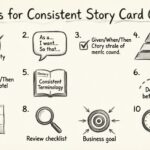
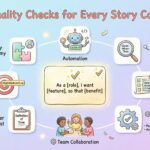
As a [type of user], I want [an action], so that [a benefit/value].
This format is deceptively simple. The “So that” portion is often the most critical. It forces the team to articulate the value. Without it, the story is just a task. With it, the story is a solution to a problem.
Example:
- As a customer, I want to filter products by size, so that I can find items that fit me quickly.
Notice the difference between “Filter products” (a task) and “Find items that fit me quickly” (a value). The workshop helps the team distinguish between the two.
2. INVEST Criteria
Once a story is drafted, it should be checked against the INVEST model. This ensures the story is manageable and useful. During the workshop, the team can quickly review each story against these principles:
- I – Independent: The story should not rely on other stories to be delivered.
- N – Negotiable: The details are flexible and can be discussed with the team.
- V – Valuable: It must deliver value to the user or stakeholder.
- E – Estimable: The team must have enough information to estimate the effort.
- S – Small: It should be small enough to be completed in a single iteration.
- T – Testable: There must be a way to verify if the story is complete.
If a story fails the “Small” or “Testable” check, it is likely a feature, not a story. The workshop should focus on breaking these down into smaller, digestible pieces.
3. Story Splitting Techniques
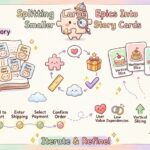
Large stories, often called epics, are too complex to build in one go. The workshop must address how to split them. Common techniques include:
- By Workflow: Break down by the steps a user takes (e.g., “View Cart” vs. “Checkout”).
- By User Type: Differentiate between roles (e.g., “Admin View” vs. “User View”).
- By Exception: Handle the happy path first, then the edge cases.
- By Business Value: Prioritize the most valuable data first.
- By Risk: Tackle the most technically uncertain parts early.
Splitting vertically is usually the goal. A vertical slice delivers a working piece of functionality. A horizontal slice (e.g., “Build the database” then “Build the UI”) delays value delivery.
Facilitation Techniques for Engagement 🎤
A workshop is only as good as the participation. If some voices dominate, the output will be skewed. The facilitator must actively manage the energy and ensure diverse input.
1. Silent Brainstorming
Start by asking everyone to write down their ideas silently. This prevents the loudest person from anchoring the group’s thinking. Once ideas are on sticky notes, group them by theme. This method, known as affinity mapping, helps identify patterns without immediate debate.
2. Dot Voting
To prioritize ideas without endless argument, give each participant 3 dots. Ask them to place dots on the stories they believe are most important. This visual representation of consensus helps the Product Owner make quick decisions on what to tackle next.
3. Story Mapping
For complex products, a simple list of stories is not enough. Story mapping places stories on a horizontal axis (backbone) representing user activities and a vertical axis (slices) representing release versions. This visualizes the entire user experience and helps the team see the “skeleton” of the product.
This technique helps answer the question: “What is the minimum viable product we can ship to test this hypothesis?” It prevents the team from building too much too soon.
Acceptance Criteria & Definition of Done ✅
Writing the story is only half the battle. Defining what “done” looks like is the other half. Acceptance criteria (AC) are the conditions that must be met for the story to be considered complete. They act as a contract between the business and the development team.
During the workshop, the team should define AC collaboratively. This is where testers and developers bring their expertise to ensure the story is testable and feasible.
Using Examples to Define Criteria
Instead of abstract rules, use concrete examples. This approach, often called Given-When-Then, provides clarity.
- Given: The user is logged in.
- When: They click the “Download Report” button.
- Then: The PDF file starts downloading automatically.
Common Acceptance Criteria Checklist
Use this checklist to ensure the criteria are robust:
- Does it handle empty states?
- How does it behave on different screen sizes?
- What happens if the network connection drops?
- Are there any security implications?
- Is the performance within acceptable limits?
Without these details, the team risks building something that works but is unusable or insecure.
Table: Example Story and Acceptance Criteria
| Story | Acceptance Criteria |
|---|---|
| As a user, I want to reset my password, so that I can regain access to my account. |
|
| As a user, I want to search for products, so that I can find what I need. |
|
Common Pitfalls & How to Avoid Them ⚠️
Even with the best intentions, workshops can go off the rails. Recognizing common pitfalls allows the team to course-correct quickly.
1. The “Feature Factory” Trap
Teams often focus on building features rather than solving problems. A story like “Add a search bar” is a feature. A story like “Help users find specific products quickly” is a value. The workshop should push back on feature-only requests.
2. Over-Engineering
Designers and developers sometimes get ahead of themselves. They might start discussing specific database schemas or UI libraries before agreeing on the user flow. Keep the focus on the “What” and “Why” before the “How”.
3. Lack of Follow-Through
It is common to have a great workshop and then lose the momentum. The output must be captured in the backlog immediately. If the sticky notes are not digitized, the work is lost. Assign a scribe to update the tracking tool during the session.
4. Table: Common Pitfalls vs. Solutions
| Pitfall | Solution |
|---|---|
| One person dominates the conversation | Use silent brainstorming or round-robin sharing. |
| Stories are too large to estimate | Split them vertically using the INVEST criteria. |
| Acceptance criteria are vague | Use Given-When-Then format for every story. |
| Meeting runs over time | Use a visible timer and enforce timeboxes per activity. |
| Output is not documented | Assign a dedicated scribe to capture results in real-time. |
Measuring Workshop Effectiveness 📊
How do you know if the workshop was successful? It is not enough to say “we had a good meeting.” You need metrics to track the improvement in quality and efficiency over time.
Consider tracking the following indicators:
- Story Rejection Rate: If stories are frequently rejected during refinement, the initial workshop was unclear.
- Completion Rate: Do stories created in the workshop get completed within the sprint?
- Change Request Frequency: Are there many changes to the requirements after development starts?
- Team Satisfaction: Survey participants to see if they felt heard and if the process was efficient.
- Velocity Stability: Does the team’s velocity become more predictable after improving story quality?
These metrics help identify if the workshop is adding value or becoming a bureaucratic hurdle. If the metrics show improvement, continue the process. If they show stagnation, adjust the format or frequency.
Final Thoughts on Collaborative Creation 🏁
Building software is a team sport. The complexity of modern applications requires more than just a list of requirements handed down from above. Workshops for user story creation provide the structure needed to align business goals with technical execution. They transform vague ideas into clear, actionable tasks that deliver real value.
By investing time in preparation, facilitation, and refinement, teams can reduce waste and increase the quality of their delivery. The goal is not to create perfect stories in a vacuum, but to create stories that everyone understands and agrees upon. This shared understanding is the foundation of a high-performing agile team.
Start small. Try a 90-minute session with a single feature. Gather the right people, use the templates, and focus on the user value. Over time, the process will become second nature, and the quality of your product will reflect the clarity of your planning.