

In the landscape of modern product development, the user story serves as the fundamental unit of work. However, a common misconception exists: that writing a story is simply moving a ticket from “To Do” to “In Progress.” This mindset often leads to feature factories—teams building things that do not solve actual problems. To shift this dynamic, teams must focus on the intent behind the work. Writing user stories that deliver real value requires precision, empathy, and a clear understanding of outcomes over outputs.
This guide explores the mechanics of crafting high-impact user stories. We will move beyond the basic template and examine how to ensure every story aligns with strategic goals, satisfies genuine user needs, and provides measurable results.
🧩 The Anatomy of a Value-Driven Story
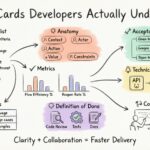
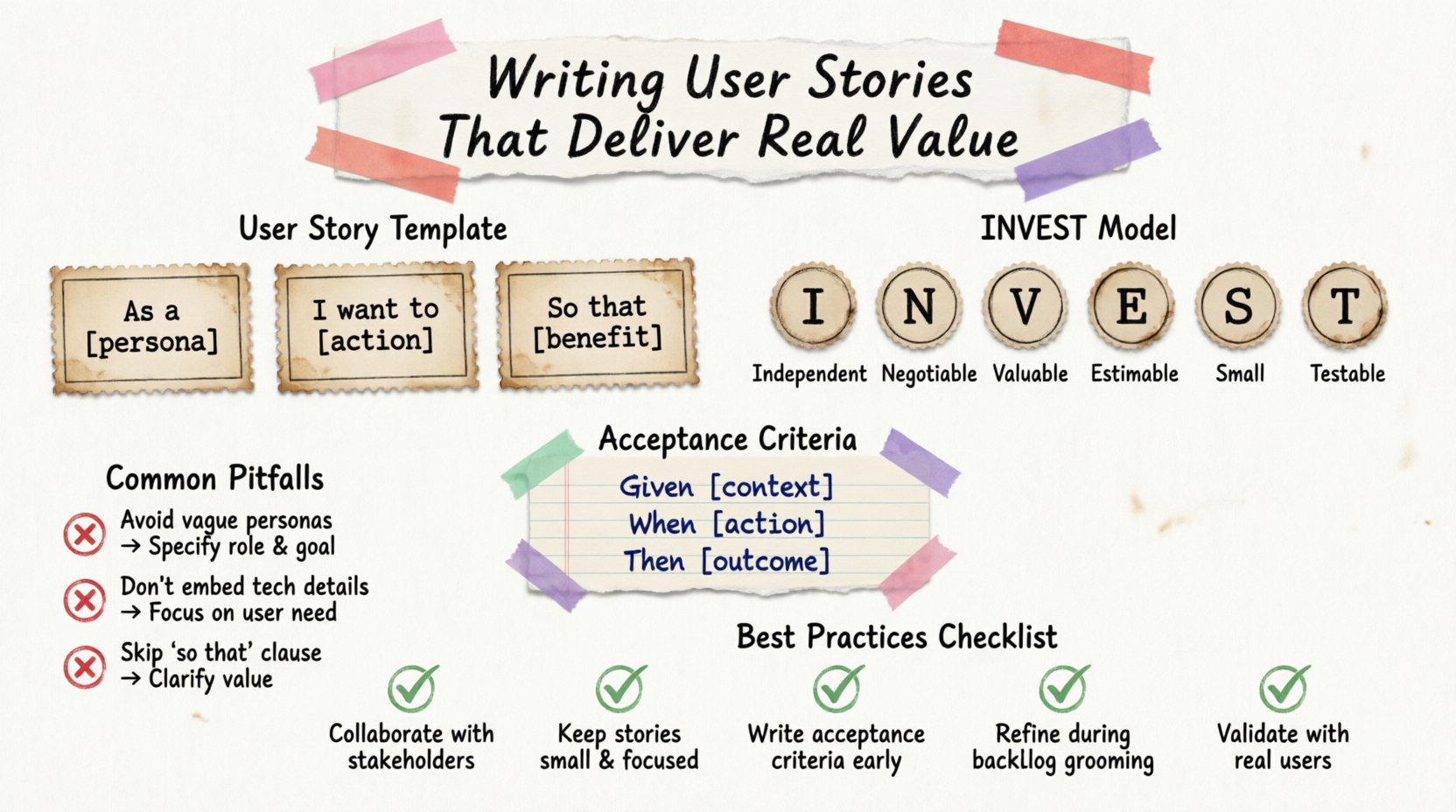
Every effective user story follows a specific structure designed to facilitate conversation. While the format is standard, the depth of the content determines the quality of the solution. The classic template is:
- As a [type of user],
- I want to [action],
- So that [benefit/value].
Let’s break down why each component matters and how to write them effectively.
1. The Persona: As a [Type of User]
This section identifies the stakeholder. A vague persona leads to generic solutions. Instead of saying “As a user,” specify the role. Are they an administrator? A guest shopper? A premium subscriber? Knowing who benefits allows the development team to tailor the solution to their specific context and capabilities.
- Bad: As a user, I want to filter results.
- Good: As a procurement manager, I want to filter results by budget.
2. The Action: I Want To [Action]
This describes the functionality or capability required. It should be a verb-driven statement. Avoid technical implementation details here. The focus is on what is needed, not how it is built. Keep the action atomic and focused on a single capability.
- Bad: I want the backend to process the API call and update the database.
- Good: I want to save my shopping cart before closing the browser.
3. The Benefit: So That [Benefit/Value]
This is the most critical part of the story. It explains why the work is being done. Without this, the team cannot prioritize or negotiate alternatives. If the “So that” clause is missing, the story is likely just a task disguised as a story.
- Bad: So that the system works.
- Good: So that I do not lose my progress if my internet connection drops.
📊 The INVEST Model Explained
To ensure quality, stories should adhere to the INVEST criteria. This acronym stands for Independent, Negotiable, Valuable, Estimable, Small, and Testable. Below is a detailed breakdown of how to apply these principles.
| Letter | Principle | Key Focus | Question to Ask |
|---|---|---|---|
| I | Independent | Low Dependency | Can this be developed without relying on another story? |
| N | Negotiable | Flexibility | Are the details open for discussion rather than fixed? |
| V | Valuable | Business Value | Does this deliver value to the user or business? |
| E | Estimable | Clarity | Do we have enough information to estimate effort? |
| S | Small | Size | Can this be completed within a single sprint? |
| T | Testable | Verification | Can we define clear acceptance criteria? |
Diving Deeper into INVEST
Independent
Dependencies create bottlenecks. If Story B cannot start until Story A is finished, they are coupled. While some dependencies are inevitable (e.g., a database schema change), they should be minimized. Independent stories allow teams to reorder work based on value.
Negotiable
The story statement is a placeholder for a conversation. It is not a contract. The implementation details should be discussed between the developer and the stakeholder. If the story dictates exactly how the code must be written, it is a specification, not a story.
Valuable
This is the core of our focus. If a story does not advance the product goal, it should be reconsidered. Value can be financial, experiential, or technical (e.g., reducing technical debt to enable future speed).
Estimable
Teams need to know how long something will take to plan effectively. If a story is too vague, estimates will be inaccurate. Break down complex concepts until the effort is clear.
Small
Large stories are unpredictable. They introduce risk. A story that takes more than a few days to complete is a candidate for splitting. Smaller stories provide faster feedback loops.
Testable
A story without a way to verify it is done is incomplete. Acceptance criteria must be defined. This ensures that the definition of “Done” is met objectively.
🛠️ Defining Acceptance Criteria
Acceptance criteria act as the guardrails for a user story. They define the boundaries of the functionality. A common approach is Gherkin syntax (Given/When/Then), which promotes clarity across technical and non-technical teams.
The Given/When/Then Format
- Given: The initial context or state of the system.
- When: The action taken by the user or system.
- Then: The expected outcome or result.
Here is an example of a story with well-defined criteria:
Story: Reset Password
As a registered user, I want to reset my password via email, so that I can regain access to my account if I forget my credentials.
Acceptance Criteria
- Given the user is on the login page, When they click “Forgot Password”, Then they are prompted to enter their email address.
- Given the user enters a valid email, When they submit the form, Then a reset link is sent to that email.
- Given the user clicks the reset link, When they enter a new password, Then they are redirected to the login page with a success message.
❌ Common Pitfalls to Avoid
Even experienced teams make mistakes. Recognizing these patterns helps in refining the process. Below are frequent errors and how to correct them.
| Pitfall | Example | Correction |
|---|---|---|
| Missing Value | “As a user, I want a button.” | Add the “So that” clause explaining the benefit. |
| Technical Focus | “As a system, I want to cache the API response.” | Rephrase to focus on the user benefit (e.g., faster load times). |
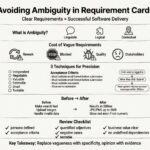
| Vague Verbs | “I want to improve performance.” | Use specific actions like “reduce load time to under 2 seconds”. |
| Too Large | “Build the entire checkout flow.” | Split into smaller stories (e.g., Cart, Shipping, Payment). |
| No Acceptance Criteria | “Allow users to upload photos.” | Define file limits, formats, and error handling. |
🤝 Collaboration and Refinement
Writing a story is not a solitary act. The card represents the beginning of a conversation. The three C’s of User Stories are Card, Conversation, and Confirmation.
- Card: The written description (the story itself).
- Conversation: The dialogue between the team to clarify requirements.
- Confirmation: The testing and validation (acceptance criteria).
Refinement sessions are where the magic happens. During these meetings, the team asks questions:
- Who is the edge case user?
- What happens if the network fails?
- Are there accessibility requirements?
- Does this conflict with existing features?
These questions transform a vague idea into a concrete plan. Developers should not wait until the start of the sprint to understand the context. Early collaboration reduces the risk of rework.
📊 Measuring Value and Success
How do we know if the story delivered value? This requires moving from tracking output (number of stories completed) to tracking outcomes (business impact). Here are methods to validate success.
1. Analytics and Metrics
If a story aims to increase sign-ups, the metric is the conversion rate. If it aims to reduce support tickets, the metric is the ticket volume. Post-release analysis confirms whether the hypothesis was correct.
2. User Feedback
Direct feedback from users is invaluable. Surveys, interviews, or support logs can reveal if the feature solved the problem or introduced new friction.
3. Adoption Rates
Even if a feature works technically, does anyone use it? Low adoption may indicate the value proposition was misunderstood or the user experience was poor.
4. Retention and Engagement
Does the story contribute to keeping users on the platform? Long-term value is often found in retention rather than one-time actions.
💡 Strategies for Ongoing Improvement
Writing high-value stories is a skill that improves with practice. Teams can adopt specific strategies to enhance their writing quality over time.
- Review Past Stories: Look at completed stories. Did they meet the acceptance criteria? Did they solve the problem? What could be clearer next time?
- Standardize Templates: Create a shared definition of what a “Ready” story looks like. This ensures consistency across the backlog.
- Empower Developers: Encourage developers to suggest refinements. They often spot logical gaps that stakeholders miss.
- Focus on the User: Regularly refer back to user research. Personas should be based on real data, not assumptions.
🔄 Iterating on the Process
The agile process is inherently iterative. Just as the software evolves, so should the way stories are written. A story that was perfect last month might need adjustment if the market shifts.
It is acceptable to close a story if it no longer provides value. This is not a failure; it is a smart business decision. Preventing work that does not matter is just as valuable as completing work that does.
By treating the user story as a communication tool rather than a task list, teams align their efforts with strategic goals. This alignment ensures that every line of code written contributes to a tangible outcome.
🎯 Summary of Best Practices
To recap, here is a checklist for ensuring your user stories deliver value:
- ✅ Clearly define the persona and the benefit.
- ✅ Ensure the story is small enough to fit in a sprint.
- ✅ Write specific acceptance criteria.
- ✅ Avoid technical jargon in the story statement.
- ✅ Validate the value before starting work.
- ✅ Collaborate with the whole team during refinement.
- ✅ Measure the outcome after release.
When these practices are consistently applied, the backlog transforms from a list of tasks into a roadmap of value. This shift empowers the team to build products that users love and businesses need.
🚀 Final Thoughts on Value Delivery
The journey toward better user stories is continuous. It requires discipline to resist the urge to jump into coding without clarity. It requires the humility to admit when a story was misunderstood. But the reward is a product that truly serves its purpose.
Every story is an opportunity to solve a problem. By focusing on the “So That” part of the equation, teams ensure that effort is never wasted. This discipline creates a culture of quality and intent, driving sustainable growth and user satisfaction.