

Presenting a customer journey map to executive leadership requires more than just showing a diagram. It demands a strategic narrative that aligns customer experience (CX) goals with business outcomes. Executives operate at a different frequency than operational teams. They focus on revenue, risk, efficiency, and market positioning. When you present a journey map, you are not merely sharing data; you are advocating for a shift in organizational priority.
This guide provides a structured approach to translating qualitative insights and quantitative metrics into a compelling business case. By focusing on clarity, evidence, and actionable outcomes, you can secure the necessary buy-in and resources to drive meaningful change.
1. Understanding the Executive Mindset 🧠
Before designing the presentation, you must understand what your audience values. Executives typically have limited attention spans and high stakes. They do not want to see every touchpoint; they want to see the impact on the bottom line.
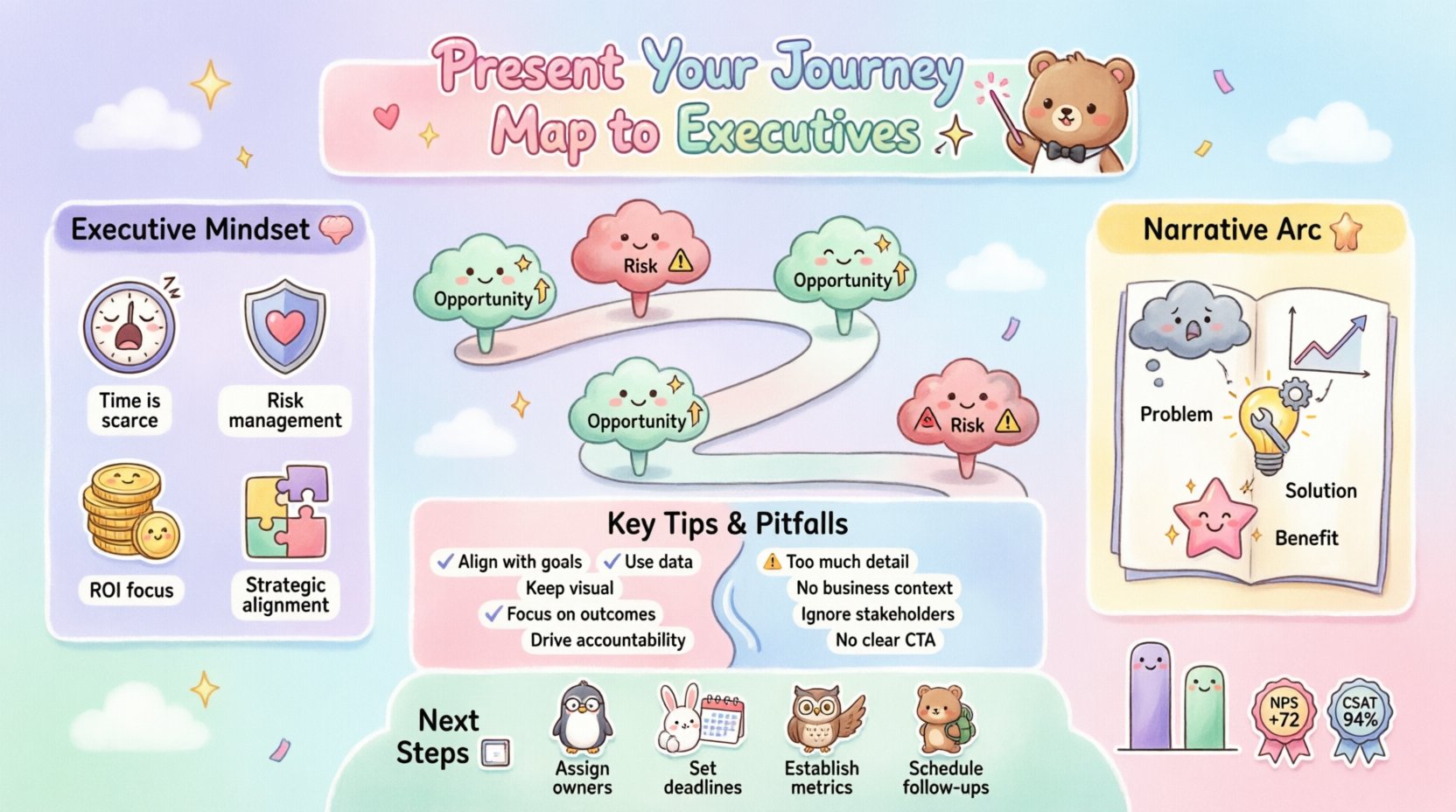
- Time is scarce: Presentations should be concise. Get to the point quickly.
- Risk management: They care about what happens if you do nothing versus what happens if you act.
- ROI focus: Every recommendation needs a connection to cost savings, revenue growth, or customer retention.
- Strategic alignment: The journey map must support the broader company strategy, not exist in a vacuum.
When you frame your journey map as a tool for strategic alignment, you move from being a researcher to a business partner. This shift in perception is critical for gaining authority and trust.
2. Defining the Narrative Arc 📖
A journey map is a story. If the story does not have a clear beginning, middle, and end, it will lose the audience. Structure your presentation around a problem-solution-benefit model.
The Problem Phase
Start by highlighting the friction points that are currently costing the business money. Do not just say customers are “frustrated.” Quantify the frustration.
- Identify the pain: Which stage of the journey causes the most drop-off?
- Connect to cost: What is the cost of support calls related to this issue?
- Highlight the risk: What is the churn rate associated with this specific journey step?
The Solution Phase
Present the journey map as the blueprint for the solution. Show how optimizing specific touchpoints resolves the identified problems.
- Visualize the fix: Use the map to show where intervention is needed.
- Explain the mechanism: How does changing this step improve the overall experience?
- Address resources: What is required to implement these changes?
The Benefit Phase
Conclude with the projected outcomes. This is where you tie the CX work back to the executive KPIs.
- Retention: How will this improve customer lifetime value?
- Efficiency: How will this reduce operational costs?
- Brand: How will this improve market perception?
3. Designing for Clarity and Impact 🎨
Visual clutter is the enemy of executive engagement. A journey map presented to leadership should be high-level and focused. Avoid overwhelming them with granular details that belong in operational workshops.
Visual Hierarchy
Use visual hierarchy to guide the eye. The most important information should be the most prominent.
- Focus on key stages: Limit the number of journey stages to 5-7 major steps.
- Highlight critical moments: Use color coding to indicate areas of high risk or high opportunity.
- Simplify the layout: Ensure the flow is logical and easy to follow from left to right or top to bottom.
Data Visualization
Integrate data directly into the visual representation. Numbers speak louder than adjectives.
- Use charts: Embed small bar charts or line graphs within the journey stages to show metrics.
- Label metrics: Clearly label NPS scores, CSAT ratings, or conversion rates next to relevant touchpoints.
- Source attribution: Always indicate where the data comes from to establish credibility.
4. Integrating Data Sources 🔗
A journey map supported by robust data is a journey map that demands action. Relying solely on anecdotal evidence is rarely sufficient for executive approval.
- Quantitative data: Use analytics to show where users drop off, how long tasks take, and conversion rates.
- Qualitative data: Use verbatim quotes from customer interviews to humanize the numbers.
- Operational data: Include internal data on call center volumes, ticket counts, and resolution times.
When you combine these sources, you create a 360-degree view of the customer experience. This triangulation of data makes it difficult for stakeholders to dismiss your findings.
5. Structuring the Presentation Meeting 🤝
The format of the meeting is just as important as the content. How you deliver the information sets the tone for the discussion.
Pre-Meeting Preparation
Send materials in advance so executives can review them. This allows the meeting to focus on discussion rather than explanation.
- Send a summary: Provide a one-page executive summary before the meeting.
- Highlight key asks: Clearly state what you need from them during the meeting.
- Anticipate questions: Prepare answers for likely objections regarding budget or timeline.
During the Meeting
Facilitate the conversation rather than lecturing. Encourage interaction and feedback.
- Start with the ‘Why’: Begin with the business impact, not the methodology.
- Keep it interactive: Ask for their perspective on specific pain points.
- Manage time: Stick to the agenda to respect their time.
- Focus on decisions: Aim to leave the meeting with clear next steps or approvals.
6. Handling Objections and Questions 💬
Executive leadership will have questions. Some may be skeptical of CX initiatives if they have not seen tangible results before. Prepare for common objections.
Common Objections
| Objection | Response Strategy |
|---|---|
| “This is too expensive.” | Compare the cost of investment against the projected loss from churn or support. |
| “We already know this.” | Reframe the data as validation of their intuition with empirical evidence. |
| “We don’t have the resources.” | Propose a phased approach with quick wins to demonstrate value early. |
| “Is this aligned with strategy?” | Map the journey improvements directly to company OKRs or strategic goals. |
Building Consensus
Use the feedback received to refine your approach. If an executive raises a valid concern, acknowledge it and adjust the plan. This shows flexibility and a commitment to the organization’s success.
- Listen actively: Do not interrupt when stakeholders voice concerns.
- Validate their input: Acknowledge that their perspective adds value to the project.
- Find common ground: Identify areas where your goals and theirs overlap.
7. Defining Next Steps and Accountability 📅
A presentation without action items is merely a discussion. To ensure the journey map leads to results, you must define clear ownership and timelines.
- Assign owners: Every recommendation should have a specific person responsible for execution.
- Set deadlines: Define realistic timelines for implementation and review.
- Establish metrics: Agree on how success will be measured post-implementation.
- Schedule follow-ups: Set dates to review progress and report on outcomes.
This accountability structure ensures that the journey map does not become a shelf-ware document. It becomes a living tool that drives organizational change.
8. Common Pitfalls to Avoid ⚠️
Even with a solid plan, certain mistakes can undermine your presentation. Being aware of these pitfalls helps you navigate the room with confidence.
Pitfall 1: Too Much Detail
Do not show every single micro-interaction. Executives need the big picture. Save the granular details for operational teams.
Pitfall 2: Lack of Business Context
Never present a journey map without explaining how it affects the business. If the map does not connect to revenue or efficiency, it will be seen as a nice-to-have rather than a need-to-have.
Pitfall 3: Ignoring Internal Stakeholders
A journey map often reveals internal process failures. Do not blame departments publicly. Frame issues as systemic opportunities for improvement rather than individual failures.
Pitfall 4: No Clear Call to Action
Always end with a specific request. Whether it is budget approval, a resource allocation, or a decision on priority, make sure the ask is explicit.
9. Measuring Success After Presentation 📊
Once the journey map is approved and action begins, you must track the impact. This creates a feedback loop that validates the initial presentation.
- Track implementation progress: Monitor if action items are being completed on time.
- Monitor customer metrics: Watch for improvements in NPS, CSAT, or retention rates.
- Report ROI: Regularly update leadership on the financial impact of the changes.
- Share wins: Celebrate small victories to maintain momentum and support.
10. Summary of Best Practices ✅
To summarize, presenting a customer journey map to executive leadership is a discipline in itself. It requires preparation, clarity, and strategic thinking.
- Align with business goals: Ensure the map supports strategic objectives.
- Use data effectively: Combine quantitative and qualitative insights.
- Keep it visual: Design for clarity and impact.
- Focus on outcomes: Prioritize ROI and efficiency in your narrative.
- Drive accountability: Define clear next steps and owners.
By following these guidelines, you transform the journey map from a static diagram into a dynamic tool for business growth. You demonstrate that customer experience is not just a department, but a core driver of organizational success.
Final Thoughts on Execution 🏁
Success in this area comes from consistency. Present the journey map not as a one-off event, but as part of an ongoing dialogue about customer value. When you consistently link customer insights to business results, you build a reputation for reliability and insight. This reputation allows you to influence decisions more effectively over time.
Remember that your role is to be the voice of the customer in the boardroom. You do this by translating customer feelings into business language. When you do this well, the journey map becomes the bridge between customer needs and corporate strategy.