

Creating an accurate representation of the customer experience requires more than just data points. It demands a deep understanding of the human narrative behind every click, call, and decision. User interviews serve as the primary bridge between raw analytics and the emotional reality of the customer journey. When executed with precision, these conversations reveal the friction, delight, and confusion that define a user’s path.
Many organizations struggle with journey mapping because they rely on internal assumptions rather than external evidence. The result is a map that looks good on a slide but fails to reflect actual behavior. To build a map that drives genuine change, you must prioritize qualitative research. This guide outlines the systematic approach to conducting user interviews that directly inform and improve your journey mapping efforts.
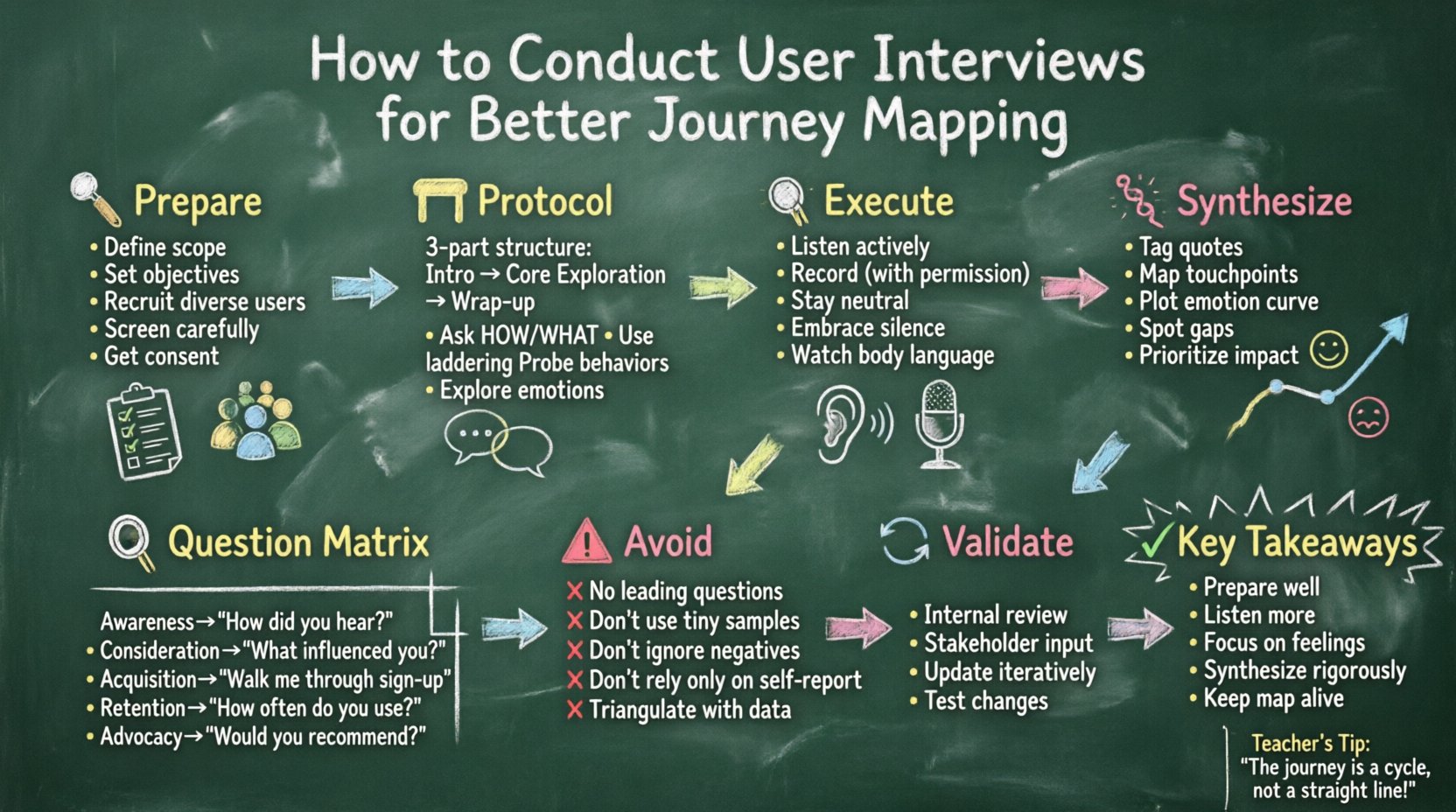
🛠️ Preparing for Qualitative Research
The foundation of a successful interview lies in the preparation phase. Rushing into a conversation without a clear framework often leads to scattered data that is difficult to synthesize. Effective preparation ensures that every minute spent with a participant yields actionable insights.
- Define the Scope: Before recruiting anyone, determine which part of the journey requires the most attention. Are you investigating the onboarding process, the purchase decision, or post-support interactions? Narrowing the focus prevents the conversation from drifting into irrelevant areas.
- Establish Objectives: Write down exactly what you need to learn. Is it about the tools they used? The emotional state during a specific step? The reasons for abandoning a process? Clear objectives guide your questioning strategy.
- Recruit the Right Participants: Your sample must represent the actual audience. Avoid recruiting only power users or customers who have never had issues. You need a mix of demographics, usage frequency, and satisfaction levels to get a holistic view.
- Screening Criteria: Create a short questionnaire to filter candidates. Ensure they have completed the specific journey you are studying. If you are mapping a return policy experience, they must have actually returned an item.
- Ethical Considerations: Ensure informed consent is clear. Explain how the data will be used, how long the session will take, and that they can stop at any time. Transparency builds trust, which leads to more honest answers.
📝 Crafting the Interview Protocol
A well-structured interview guide acts as a roadmap for the session. It keeps the conversation on track while allowing for natural exploration. The guide should not be a rigid script, but rather a flexible framework of topics and open-ended questions.
Structuring the Session
Divide the interview into three distinct sections to maintain flow and comfort.
- Introduction: Start with low-stakes questions to build rapport. Ask about their background or general habits. This reduces anxiety and encourages openness.
- Core Exploration: This is the heart of the session. Dive into specific interactions within the journey. Ask them to walk you through their experience chronologically.
- Wrap-Up: Summarize what you heard to confirm understanding. Ask if there is anything important they forgot to mention. Thank them for their time.
Questioning Techniques
The way you ask questions determines the quality of the data you receive. Avoid yes-or-no questions that shut down conversation. Instead, use prompts that require elaboration.
- Open-Ended Starters: Begin with “How,” “What,” or “Tell me about.” For example, “What was going through your mind when you first saw the pricing page?”
- The Laddering Technique: If a user mentions a frustration, ask “Why” to dig deeper. This helps uncover root causes rather than surface symptoms.
- Behavioral Probes: Ask for specific instances. “Can you describe the last time you encountered this issue?” This anchors the conversation in reality rather than hypothetical scenarios.
- Emotional Inquiry: Journey mapping relies heavily on emotional states. Ask about feelings at different stages. “How did that make you feel?” or “Was that frustrating or confusing?”
🎤 Executing the Session
Conducting the interview requires active listening and discipline. It is easy to become too eager to explain or solve a problem. Your role is to observe and understand, not to consult.
- Environment: Choose a setting where the participant feels safe. Whether virtual or physical, minimize distractions. Ensure the connection is stable if online.
- Recording: Always record the session with permission. Relying on memory or quick notes during the conversation can cause you to miss non-verbal cues or detailed stories.
- Active Listening: Pay attention to tone, pauses, and body language. A sigh or a long pause often indicates a point of friction that words alone might not reveal.
- Neutrality: Avoid validating or invalidating their experience. Do not say “That makes sense” or “You shouldn’t feel that way.” Instead, use neutral acknowledgments like “I understand” or “Thank you for sharing that.”
- Handling Silence: Do not rush to fill every silence. Participants often need time to formulate thoughts. Silence often precedes the most valuable insight.
🧩 Synthesizing Insights into the Map
Collecting data is only half the work. The next step is translating raw interview transcripts into visual journey map elements. This process requires identifying patterns across different users.
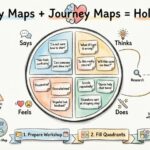
- Tagging Data: Review recordings and transcripts. Tag specific quotes or moments with labels like “Confusion,” “Pain Point,” “Delight,” or “Channel Switch.”
- Identifying Touchpoints: Map the interview timeline to the physical or digital touchpoints you are studying. Note where the user engaged with your brand versus where they sought information elsewhere.
- Mapping Emotions: Plot the emotional highs and lows identified during the interview onto the journey curve. This visualizes the emotional cost of the experience.
- Spotting Gaps: Compare the user’s story against your internal process. Where did the user get stuck? Where did your expectations differ from their reality? These gaps are where improvement opportunities exist.
- Prioritization: Not all insights are equal. Prioritize issues that affect the majority of users or cause significant friction. Focus on the critical path of the journey.
📊 Interview Question Matrix by Journey Stage
Different stages of the journey require different lines of inquiry. The table below illustrates how to tailor your questions based on the specific phase you are investigating.
| Journey Stage | Primary Goal | Sample Question Focus | Emotional Indicator |
|---|---|---|---|
| Awareness | Discovery & Awareness | How did you first hear about the solution? | Curiosity, Skepticism |
| Consideration | Evaluation & Comparison | What factors influenced your decision to try? | Confidence, Uncertainty |
| Acquisition | Purchase & Onboarding | Walk me through the sign-up process. | Excitement, Frustration |
| Retention | Usage & Value | How often do you use this feature? | Satisfaction, Habit |
| Advocacy | Recommendation & Feedback | Would you recommend this to a colleague? | Trust, Loyalty |
⚠️ Common Mistakes to Avoid
Even experienced researchers can fall into traps that compromise the integrity of the data. Being aware of these pitfalls helps maintain the quality of your journey mapping inputs.
- Leading Questions: Never suggest an answer in your question. Asking “Did you find the checkout confusing?” implies it was confusing. Ask “How was the checkout experience?” instead.
- Small Sample Sizes: One or two users are not enough to define a journey. Aim for a diverse group that represents your key segments. Five to eight users can reveal most usability issues, but more are needed for journey complexity.
- Ignoring Negative Feedback: It is tempting to focus on what went well. However, the most valuable improvements often come from analyzing the moments of failure and frustration.
- Over-Reliance on Self-Reported Data: Users may not always recall their actions accurately. Where possible, ask them to show you their screen or walk through the steps rather than just describing them.
- Failing to Triangulate: Do not rely solely on interviews. Combine qualitative insights with quantitative data, such as analytics or survey results, to validate findings.
🔄 Validating the Journey
Once you have built the map based on interview insights, the work is not finished. You must validate that the map holds true over time and across different contexts.
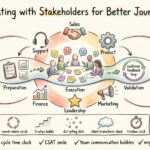
- Internal Review: Share the draft map with stakeholders to check for alignment. Do sales, support, and product teams agree on the narrative?
- Stakeholder Interviews: Talk to internal employees. Their perspective on the backend processes can explain why certain front-end friction points exist.
- Iterative Updates: The customer journey is not static. Schedule regular reviews to update the map as new products launch or market conditions change.
- Continuous Testing: Treat the journey map as a hypothesis. Test changes based on the map and measure the impact. If the friction point disappears, the map should reflect that improvement.
📈 Integrating into Strategy
The value of user interviews for journey mapping extends beyond documentation. It influences decision-making across the organization.
- Resource Allocation: Use the map to identify where investment is needed. If the onboarding stage has high drop-off, prioritize resources there.
- Team Alignment: The map serves as a shared artifact. It ensures everyone from design to development understands the user’s perspective.
- Customer Service Training: Use interview quotes in training materials to show agents what real customers experience. This builds empathy in support teams.
- Product Roadmap: Prioritize features that address the specific pain points uncovered during the interviews. This keeps development user-centric.
📝 Key Takeaways for Success
Conducting user interviews for journey mapping is a disciplined practice that combines empathy with analytical rigor. The goal is to construct a narrative that is true to the user, not true to the business’s hopes.
- Preparation is critical: Define clear goals and recruit diverse participants.
- Listen more than you speak: Create space for the user to tell their story.
- Focus on emotions: The journey is defined by feelings as much as actions.
- Synthesize rigorously: Turn raw notes into structured data points.
- Validate continuously: Keep the map alive and updated.
By adhering to these principles, you create a customer journey map that is not just a visual aid, but a strategic tool. It becomes a living document that guides product development, marketing, and support interactions. The insights gathered from these conversations ensure that every decision made is grounded in the reality of the people you serve. This approach builds trust, reduces friction, and ultimately leads to a more cohesive and satisfying customer experience.
Remember that the journey is a cycle, not a straight line. As you conduct more interviews and gather more data, your understanding will deepen. The map evolves with your customers. This ongoing process ensures that your organization remains responsive to changing needs and behaviors. Invest the time in the research, and the resulting journey map will pay dividends in clarity and direction.