

Moving from an Individual Contributor (IC) role to a Design Manager position marks one of the most significant shifts in a UX designer’s career. It is not merely a promotion; it is a fundamental change in identity, daily responsibilities, and value delivery. Many talented designers find themselves navigating this terrain without a clear map, often relying on intuition rather than strategy. This guide provides a structured approach to understanding the nuances of design leadership, ensuring you build a foundation that supports both your team and your organization.
Understanding the Shift in Responsibility 🔄
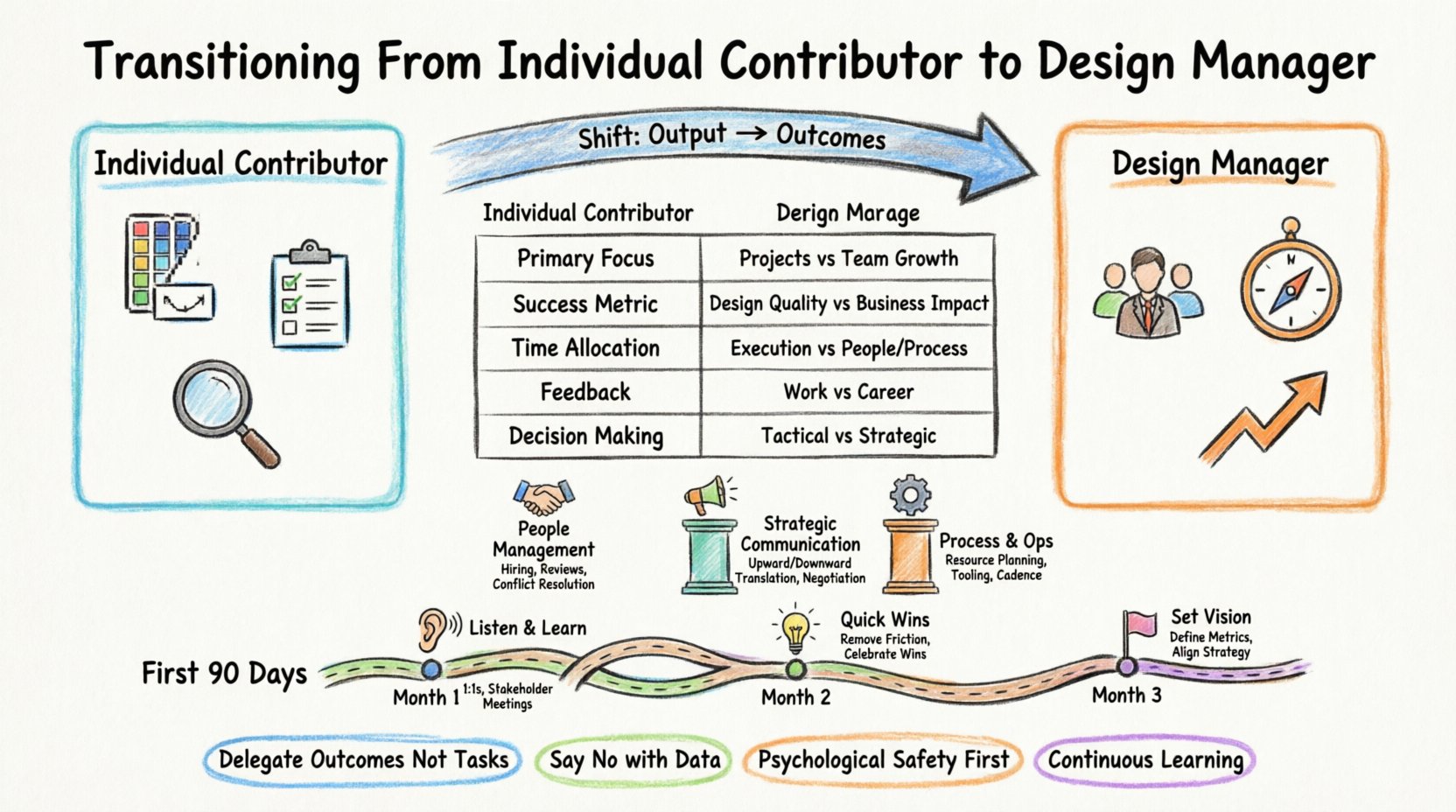
The transition involves moving from a focus on output to a focus on outcomes. As an Individual Contributor, your success is measured by the quality of your designs, the speed of your execution, and the depth of your research. As a manager, your success is measured by the growth of your team, the health of your culture, and the strategic impact of your group’s work.
This does not mean you stop designing. However, the nature of your design work changes. You may no longer be the primary person drawing pixels or writing copy. Instead, you become the architect of the environment in which your team thrives. You remove obstacles, clarify goals, and facilitate collaboration. The shift can feel disorienting when you are no longer the primary creator of the artifacts you love.
Core Differences: IC vs. Manager
To visualize this change, consider the following breakdown of responsibilities.
| Aspect | Individual Contributor | Design Manager |
|---|---|---|
| Primary Focus | Execution of specific projects | Team growth and strategic alignment |
| Success Metric | Design quality and delivery | Team satisfaction and business impact |
| Time Allocation | High % on execution | High % on people and process |
| Feedback Loop | Direct feedback on work | Feedback on career and performance |
| Decision Making | Tactical and design choices | Strategic and resource allocation |
Developing the Necessary Skill Set 🧠
Design management requires a hybrid skill set. You cannot rely solely on your design expertise. You must cultivate skills in leadership, communication, and business strategy. The following areas are critical for success.
1. People Management
Managing people is distinct from managing projects. It involves understanding individual motivations, strengths, and weaknesses. You will need to conduct one-on-one meetings regularly to discuss career goals, well-being, and performance. This requires empathy and active listening. You must learn to give constructive feedback that challenges without demoralizing.
- Hiring: You will be responsible for defining job descriptions, screening candidates, and conducting interviews. This is where you shape the team’s DNA.
- Performance Reviews: You must provide clear, documented feedback. This helps team members understand their trajectory and where they need to improve.
- Conflict Resolution: Disagreements will happen. Your role is to mediate these discussions and find a path forward that respects all viewpoints.
2. Strategic Communication
As a manager, you become a bridge between the design team and other departments. You must translate design decisions into business value for stakeholders. This means speaking the language of revenue, efficiency, and user retention rather than just visual hierarchy or interaction patterns.
- Upward Management: You need to keep leadership informed of progress and risks. Transparency builds trust.
- Downward Translation: You must ensure the team understands the “why” behind business goals. Context empowers better design decisions.
- Negotiation: You will often need to push back on timelines or scope. You must do this diplomatically, offering alternatives rather than just saying no.
3. Process and Operations
While you do not need to be a process police officer, you must ensure the team has the systems they need to work efficiently. This includes establishing workflows for design reviews, handoffs, and research planning. A lack of structure leads to chaos and burnout.
- Resource Planning: You need to understand capacity. How many projects can your team handle? When do you need to hire more people?
- Tooling Strategy: Ensure the team has access to the right tools for collaboration and research, without getting bogged down in setup.
- Cadence: Establish regular rhythms, such as weekly team meetings or monthly showcases, to maintain alignment.
The First 90 Days: A Strategic Plan 📅
The beginning of your tenure as a Design Manager is critical. How you spend your first three months sets the tone for your leadership style. It is important to resist the urge to make immediate changes or fix everything at once. Instead, focus on listening and learning.
Month 1: Listen and Learn
In the first thirty days, your primary goal is to understand the landscape. You should not make significant changes to team structure or processes yet. Focus on building relationships.
- One-on-Ones: Schedule time with every team member. Ask about their goals, frustrations, and what they need from you.
- Stakeholder Meetings: Meet with leaders in other departments to understand their expectations and pain points.
- Review Past Work: Look at recent projects to understand what worked and what did not. Identify patterns in delays or quality issues.
Month 2: Identify Quick Wins
After gathering information, look for low-hanging fruit. These are small changes that can improve morale or efficiency without requiring massive effort. This builds momentum and credibility.
- Remove Friction: If a process is consistently slow, investigate why and simplify it.
- Clarify Goals: Ensure everyone knows what success looks like for the upcoming quarter.
- Celebrate Wins: Publicly acknowledge team achievements. Recognition fuels motivation.
Month 3: Set the Vision
By the third month, you should have enough context to propose a direction. This is where you shift from observing to leading. You define the team’s mission and the metrics that will track progress.
- Define Metrics: Establish how you measure team health and design impact.
- Plan Hiring: Based on the workload and skills gaps identified, create a hiring plan.
- Align Strategy: Ensure the team’s roadmap aligns with the broader company objectives.
Managing People vs. Managing Projects 👥
One of the most common pitfalls for new managers is continuing to micromanage projects. You may feel the need to approve every pixel or dictate every research method. This creates a bottleneck and prevents your team from growing.
Delegation Strategies
Effective delegation is about assigning responsibility, not just tasks. You must trust your team to own their work. Here is how to approach this:
- Clarify Outcomes: Define what success looks like, but leave the “how” up to the designer.
- Set Checkpoints: Agree on milestones where you review progress. This provides support without constant oversight.
- Encourage Autonomy: Allow designers to make decisions. Mistakes are part of the learning process.
Handling Performance Issues
Not every team member will be a perfect fit. Some may struggle with specific skills, while others may face personal challenges. You need to address these issues early and directly.
- Document Everything: Keep records of conversations, feedback, and performance reviews.
- Create Improvement Plans: If performance is lagging, work with the individual to create a plan with clear goals and timelines.
- Know When to Move On: Sometimes, a team member is not the right fit. Making the difficult decision to let someone go can be better for the team in the long run.
Stakeholder Management and Influence 🤝
Design Managers spend a significant amount of time outside the design team. You are the face of design to the rest of the organization. This requires high-level influence skills.
Saying No Strategically
You will be asked to do more than you have the capacity for. Saying no is a vital skill. However, it must be done with a reason. Instead of a flat refusal, offer alternatives.
- Explain Trade-offs: Show stakeholders what happens if they take on more work. What quality might suffer? What timeline might slip?
- Prioritize Together: Ask stakeholders to help prioritize. This shared ownership makes it easier to say no to lower-priority items.
- Use Data: Reference research or past metrics to back up your decisions. Data reduces subjectivity.
Building Trust
Trust is built over time through consistency. When you say you will deliver, you deliver. When you say you cannot deliver, you explain why. Trust reduces friction in future projects.
- Underpromise and Overdeliver: It is better to set realistic expectations and exceed them than to promise the moon and fall short.
- Be Transparent: If there is a risk, communicate it early. Hiding problems only makes them harder to solve later.
- Understand Their Goals: Show that you care about the business goals, not just the design goals. This aligns your interests.
Team Culture and Well-being 🌱
The health of your team is a direct reflection of your leadership. A team that is burned out cannot produce high-quality work. You must actively foster an environment that supports well-being.
Psychological Safety
Team members must feel safe to speak up, share ideas, and admit mistakes. If they fear punishment for errors, they will hide problems until they become crises.
- Encourage Dissent: Invite people to disagree with you. Reward critical thinking.
- Own Your Mistakes: When you make a mistake, admit it publicly. This gives others permission to do the same.
- Post-Mortems: After projects, discuss what went wrong without assigning blame. Focus on systemic improvements.
Preventing Burnout
Burnout is often a result of chronic stress and lack of recovery. As a manager, you must model healthy boundaries.
- Monitor Workload: Keep an eye on who is consistently working overtime. Rotate heavy tasks among team members.
- Encourage Time Off: Take your own vacation and encourage others to do the same. Disconnecting is essential for creativity.
- Provide Growth: Stagnation leads to burnout. Ensure team members have opportunities to learn new skills and take on new challenges.
Continuous Learning for Leaders 📚
The transition to management does not mean you stop learning. In fact, the learning curve becomes steeper. You need to stay updated on design trends, but also on leadership theories and business strategies.
- Seek Mentorship: Find a senior leader who can guide you through complex situations. Their experience is invaluable.
- Read Widely: Read books on management, psychology, and business. Design knowledge is only one part of the equation.
- Network: Connect with other design managers. They face similar challenges and can offer practical advice.
- Reflect: Take time to reflect on your week. What went well? What could be improved? Continuous reflection leads to continuous improvement.
Conclusion on Leadership Growth
Becoming a Design Manager is a journey of constant adaptation. It requires you to let go of the control you had as an Individual Contributor and trust the people you hire. It is not about being the best designer in the room anymore; it is about creating a room where everyone can be their best. This shift demands patience, empathy, and a commitment to the growth of others. By focusing on strategic alignment, team health, and clear communication, you can build a design organization that delivers exceptional value to users and the business alike.