

User experience design is more than aesthetics or flow; it is the architecture of human behavior. Every button, layout, and interaction influences choices. When power dynamics shift between the product creator and the user, ethical questions arise. Handling ethical dilemmas in user experience design requires a deep understanding of human psychology, business constraints, and moral responsibility. This guide explores the core principles, common pitfalls, and practical frameworks for maintaining integrity in digital products.
Defining the Ethical Landscape in UX ⚖️
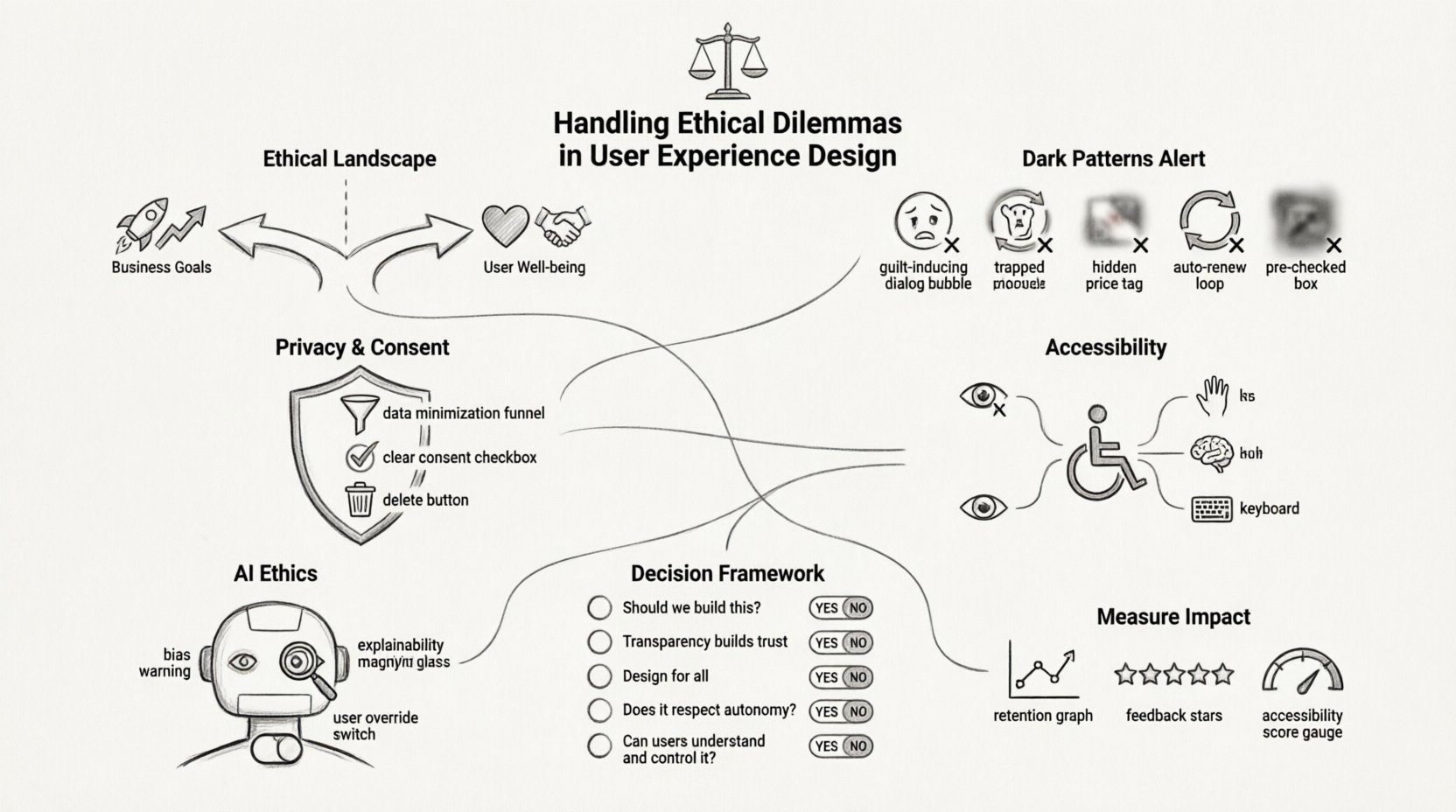
Ethics in design refers to the moral principles that govern the behavior of the designer. It involves asking whether a design choice respects the user’s autonomy, privacy, and well-being. An ethical dilemma occurs when there is a conflict between two or more values, such as user retention versus user safety.
Common scenarios include:
- Business Goals vs. User Well-being: Maximizing revenue might conflict with minimizing screen time or data usage.
- Short-term Gains vs. Long-term Trust: A tactic that drives immediate sign-ups might erode trust over time.
- Efficiency vs. Accessibility: Streamlining a process might inadvertently exclude users with disabilities.
Addressing these dilemmas requires a shift from asking “Can we build this?” to “Should we build this?” This mindset prioritizes the human element over pure optimization metrics.
Recognizing Dark Patterns and Manipulative Tactics 🚫
Dark patterns are user interface designs that trick users into doing things they might not otherwise do. They exploit cognitive biases to manipulate behavior. Identifying these patterns is the first step in ethical design.
Common Dark Patterns to Avoid
- Confirm Shaming: Using language that induces guilt to prevent cancellation. Example: “Are you sure you want to leave?” vs. “Yes, I prefer poor service.”
- Roach Motel: Making it easy to sign up but difficult to cancel or delete an account.
- Hidden Costs: Revealing the total price only at the final checkout stage.
- Forced Continuity: Converting free trials into paid subscriptions without clear consent.
- Sneak into Basket: Pre-checking boxes for additional services or products the user did not select.
Avoiding these tactics is not just about compliance; it is about respect. Users deserve transparency. When users feel manipulated, they disengage, and brand loyalty diminishes.
Privacy, Data, and User Consent 🛡️
Data collection is fundamental to modern digital products, but the scope and purpose matter. Ethical dilemmas often center on how much data is collected and how it is used.
Principles of Ethical Data Handling
- Data Minimization: Collect only the data necessary for the specific function.
- Informed Consent: Users must understand what they are agreeing to. Avoid pre-ticked boxes or vague legal jargon.
- Contextual Integrity: Data collected for one purpose should not be repurposed without explicit permission.
- Right to be Forgotten: Provide clear mechanisms for users to delete their data completely.
When users trust that their data is safe, they engage more deeply. Transparency builds this trust. A clear privacy policy is a starting point, but the design of consent flows is where the ethical battle is won.
Accessibility as an Ethical Imperative ♿
Designing for accessibility is a moral obligation. Excluding users with disabilities is a form of discrimination. Ethical dilemmas arise when accessibility conflicts with design trends or budget constraints.
Key Accessibility Considerations
- Visual Impairments: Ensure sufficient color contrast and support for screen readers.
- Motor Impairments: Design touch targets large enough for users with limited dexterity.
- Cognitive Load: Keep navigation simple and instructions clear for users with cognitive differences.
- Keyboard Navigation: Ensure all interactive elements are accessible without a mouse.
Ignoring accessibility limits the reach of your product. It is not merely a technical checklist; it is an inclusion strategy.
A Framework for Ethical Decision Making 📋
When facing a dilemma, a structured approach helps clarify the path forward. Use the following checklist to evaluate design decisions.
The Ethical Design Checklist
| Question | Yes / No | Implication |
|---|---|---|
| Does this design respect user autonomy? | Forcing actions undermines control. | |
| Is the intent transparent? | Hidden motives erode trust. | |
| Could this harm vulnerable users? | Protecting the vulnerable is paramount. | |
| Does this prioritize user well-being over profit? | Short-term gain vs. long-term value. | |
| Is the data usage necessary? | Collecting data for no reason is theft. |
Answering “No” to any of these questions signals a need for redesign. This framework should be applied during the research, design, and testing phases.
Building Organizational Ethical Culture 🏛️
Individual designers cannot fix systemic issues alone. Ethical design requires support from leadership and a culture that values integrity over speed.
Strategies for Cultural Change
- Establish a Code of Ethics: Create a document that outlines the company’s stance on user privacy and manipulation.
- Encourage Whistleblowing: Allow team members to report unethical practices without fear of retaliation.
- Stakeholder Education: Teach product managers and executives about the risks of dark patterns.
- Review Boards: Implement an ethics review process for high-impact features.
When the organization aligns with ethical values, designers feel empowered to push back against questionable requests. This alignment reduces the cognitive dissonance for the design team.
Emerging Challenges in AI and Algorithmic Design 🤖
Artificial intelligence introduces new ethical complexities. Algorithms make decisions that affect users, often without human intervention.
AI Ethics Considerations
- Bias in Training Data: Algorithms can perpetuate existing societal biases if the data is skewed.
- Explainability: Users should understand why an algorithm made a specific recommendation or decision.
- Automation vs. Control: Ensure users retain the ability to override automated systems.
- Deepfakes and Misinformation: Avoid tools that generate content capable of deceiving users.
As AI becomes more integrated into UX, the designer’s role shifts to auditing algorithmic behavior. This requires technical knowledge and ethical vigilance.
Measuring the Impact of Ethical Design 📊
How do you know if your design is ethical? Metrics provide feedback, but standard engagement metrics can be misleading. High engagement does not always equal a good experience.
Ethical Metrics to Track
- Retention Rates: Do users stay because they value the product, or because they are locked in?
- Support Ticket Volume: High volumes often indicate confusion or frustration caused by unclear design.
- User Feedback Scores: Qualitative feedback regarding trust and satisfaction.
- Churn Reasons: Analyze why users leave. Is it frustration with the process?
- Accessibility Audit Scores: Regular testing against WCAG guidelines.
Tracking these metrics helps demonstrate the business value of ethical design. It shows that integrity drives sustainable growth.
Case Scenarios and Practical Application
To understand these concepts in practice, consider specific scenarios where ethical dilemmas arise.
Scenario 1: Subscription Traps
A team wants to increase recurring revenue. The proposal involves making the cancel button invisible. An ethical review would flag this as a “Roach Motel.” The alternative is to provide a clear, accessible cancellation path. This might reduce short-term revenue but protects the brand reputation.
Scenario 2: Data Monetization
A team plans to sell user location data to third parties. Users are not explicitly informed. Ethical guidelines dictate that this requires explicit, granular consent. The design must allow users to opt-in for specific data uses, not just a blanket agreement.
Scenario 3: Dark Mode vs. Accessibility
Dark mode is popular, but it can reduce contrast for users with certain visual impairments. The ethical choice is to make dark mode optional and ensure high-contrast text remains readable. Do not force dark mode as the default if it compromises accessibility.
Conclusion on Ethical Responsibility
Design is a powerful tool. It shapes habits, influences decisions, and defines the digital world we live in. With this power comes the responsibility to act with integrity. Handling ethical dilemmas in user experience design is not a one-time task; it is an ongoing practice.
By prioritizing user autonomy, transparency, and accessibility, designers create products that serve people rather than exploit them. This approach builds lasting relationships and sustainable business models. The goal is not to be perfect, but to remain vigilant. As technology evolves, so must our commitment to ethical standards.
Start today. Review your current projects through an ethical lens. Ask the hard questions. The future of design depends on the choices made now.