

In the digital age, your professional identity extends far beyond your resume. Your personal brand is a composite of your skills, values, online presence, and how others perceive you. Reputation is fragile. A single misstep or a pattern of overlooked behaviors can erode trust built over years. To navigate this landscape effectively, professionals need a structured method for assessment and planning. The SWOT analysis provides a clear framework to evaluate your standing and protect your professional image.
This guide explores how to apply the SWOT methodology specifically to reputation management. We will move past generic business advice and focus on the nuances of personal branding, digital footprints, and long-term career security. By understanding your internal capabilities and external pressures, you can build a resilient brand that withstands industry shifts and online scrutiny.
🔍 Why Reputation Management Requires Strategic Planning
Personal brand reputation is not static. It evolves with every post, every interaction, and every project you complete. Without a formal review process, you might miss subtle signals that indicate a decline in how you are perceived. Reputation management is not just about crisis control; it is about proactive maintenance.
Consider the following factors that influence how your brand is viewed:
Digital Footprint: Search results, social media profiles, and archived content.
Professional Network: Endorsements, recommendations, and peer associations.
Public Perception: How your content is received in forums, comments, or industry discussions.
Consistency: Alignment between your stated values and your actual actions.
Ignoring these elements leaves you vulnerable to misunderstandings or outdated perceptions. A SWOT analysis brings structure to this assessment, allowing you to see the big picture without getting lost in the noise.
🧩 Understanding SWOT in a Personal Brand Context
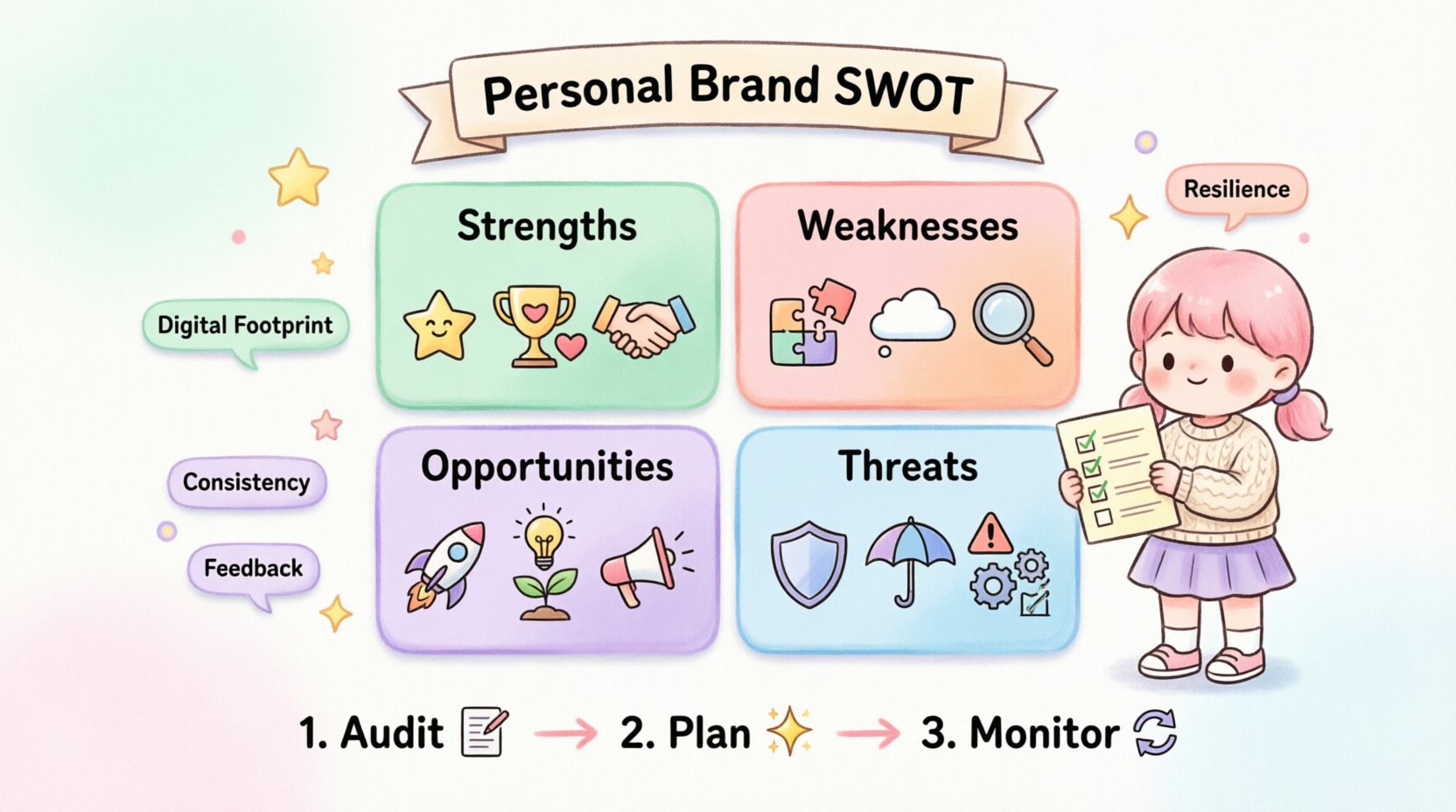
The SWOT framework stands for Strengths, Weaknesses, Opportunities, and Threats. While often used in corporate strategy, its application to personal branding requires a shift in perspective. Instead of analyzing market share, you analyze influence, credibility, and reach.
Here is how the four quadrants translate to your career:
Strengths (Internal): What you do well and what sets you apart.
Weaknesses (Internal): Areas where you lack skills or resources that impact your image.
Opportunities (External): Trends or connections you can leverage to grow.
Threats (External): Risks outside your control that could damage your standing.
When applied to reputation, this tool helps you distinguish between what you can control (your output, your communication) and what you must monitor (industry trends, public sentiment).
📊 Step-by-Step: Conducting the Analysis
Executing this analysis requires honesty and a willingness to look at your brand objectively. Do not rely on assumptions. Gather data from your online presence, feedback from colleagues, and your own self-reflection. Follow this process to ensure a comprehensive review.
1. Audit Your Digital Presence
Before listing factors, you need a baseline. Search your name on major search engines. Review your social media profiles. Check what content appears on the first page of results. Does this align with the professional image you want to project? If your search results show outdated projects or controversial comments, that is data for your analysis.
2. Gather External Feedback
Ask trusted peers or mentors for their perspective. What do they associate with your name? Do they view you as an expert, a collaborator, or something else? Sometimes, the gap between your self-perception and public perception is the most critical area to address.
3. Categorize Findings
Place your findings into the four quadrants. Be specific. Instead of writing “good communication,” write “able to explain complex technical concepts to non-technical stakeholders.” Specificity makes the subsequent action plan more effective.
🦸 Strengths: Leveraging Your Core Assets
Your strengths are the foundation of your reputation. These are the internal attributes that bring you value and recognition. In the context of brand reputation, strengths are the elements that build trust and authority.
Identifying Key Strengths
Focus on what consistently gets you positive results. Look for patterns in your career.
Expertise: Do you have certifications or a track record of solving difficult problems?
Communication Style: Are you known for clarity, empathy, or assertiveness?
Network: Do you have access to influential people or communities?
Consistency: Have you maintained a steady output over time?
Once identified, these strengths should be highlighted in your bio, portfolio, and conversations. They are the anchors that keep your reputation stable even when industry trends change.
🚧 Weaknesses: Addressing Internal Gaps
Weaknesses are internal limitations that may hinder your professional growth or damage your image. Unlike strengths, these often require work or mitigation. In reputation management, weaknesses are often where vulnerabilities hide.
Common Weaknesses to Investigate
Be honest about where you fall short.
Visibility: Are you active on platforms where your peers are?
Content Quality: Is your writing or presentation style polished?
Niche Focus: Are you too broad, making it hard for people to define what you do?
Response Time: Do you reply to inquiries or comments promptly?
Addressing a weakness does not always mean fixing it completely. Sometimes, it means acknowledging it and managing expectations. If you are not a video speaker, do not force it. Instead, focus on written thought leadership where you excel.
🚀 Opportunities: Capitalizing on External Trends
Opportunities are external factors you can use to enhance your reputation. These are not about what you can do, but about what the environment offers you. The digital landscape changes rapidly, creating new channels for influence.
Where to Look for Opportunities
Scan the horizon for openings that align with your strengths.
New Platforms: Are there emerging communities where you can establish early authority?
Industry Shifts: Is a new technology or regulation creating a need for your specific knowledge?
Collaborations: Are there peers you could partner with to cross-pollinate audiences?
Speaking Engagements: Are there conferences or webinars accepting speakers in your field?
Seizing an opportunity often boosts visibility and reinforces your status as a forward-thinking professional. It shows you are engaged with the current state of your industry.
⚠️ Threats: Protecting Against External Risks
Threats are external risks that could harm your reputation. These are often the most critical part of a reputation safeguarding strategy. You cannot control these, but you can prepare for them.
Identifying Potential Threats
Consider factors that exist outside your direct influence.
Competition: Are others doing similar work with more visibility?
Reputation Errors: Is there outdated information about you that has not been corrected?
Industry Stigma: Is your field facing negative public sentiment?
Algorithm Changes: Do you rely on a platform that might change its rules?
A threat becomes a crisis when you are unprepared. Regular monitoring helps you spot these risks early. For example, if a competitor launches a service that mirrors yours, you must adjust your messaging to highlight your unique value immediately.
📋 Strategic SWOT Matrix for Reputation
Visualizing your analysis helps in planning. Below is a representation of how these factors interact within a personal brand context.
Internal | Positive (Helps) | Negative (Hinders) |
|---|---|---|
External | Opportunities | Threats |
Internal | Strengths | Weaknesses |
Using this matrix, you can generate strategies. For instance, you can use a Strength to take advantage of an Opportunity. You can use a Strength to minimize a Threat.
🛠️ Turning Analysis Into Action
Completing the SWOT analysis is only the first step. The real value comes from the action plan you build based on the results. This phase is about bridging the gap between where you are and where you want to be reputationally.
Developing the Action Plan
For every item identified in your SWOT, decide on a specific action. Use the following criteria:
Immediate: Fix critical issues now (e.g., delete outdated posts).
Short-term: Implement changes within the next quarter (e.g., update LinkedIn headline).
Long-term: Build habits over the next year (e.g., publish monthly articles).
Here is a template for converting your findings into tasks:
SWOT Element | Action Item | Timeline | Success Metric |
|---|---|---|---|
Weakness: Outdated Portfolio | Refresh case studies with latest projects | 2 Weeks | Portfolio page views increase |
Threat: Negative Search Result | Publish positive content to push result down | 1 Month | Result moves to page 2 |
Opportunity: New Industry Conference | Submit proposal for speaking slot | 3 Months | Accepted as speaker |
Strength: Strong Network | Request testimonials from connections | 1 Month | 5 new endorsements |
🔄 Continuous Monitoring and Maintenance
Reputation is not a one-time project. It requires ongoing attention. The environment changes, and so should your strategy. Establish a routine to revisit your SWOT analysis.
Schedule Regular Reviews
Set a calendar reminder to conduct a mini-audit every quarter. Ask yourself:
Has my digital footprint changed significantly?
Have new competitors entered the space?
Are my strengths still relevant to the market?
Have I addressed the weaknesses identified in the last review?
Consistency in monitoring prevents small issues from becoming major crises. It also ensures you remain agile enough to pivot when necessary.
🔒 Building Resilience Into Your Brand
The goal of this process is resilience. A resilient personal brand can absorb shocks without losing its core value. This comes from diversifying your presence and deepening your expertise.
Diversify Your Channels
Do not rely on a single platform for your reputation. If an algorithm changes on one site, you should still have presence elsewhere. Maintain a professional website, a social media profile, and perhaps a newsletter. This reduces the risk of external factors wiping out your visibility.
Own Your Narrative
Ensure you control the primary content associated with your name. Your own website or blog is the most secure asset because you own the domain. Regularly publish content that reflects your current values and skills. This pushes older, potentially outdated content down in search results naturally.
🤝 Handling Negative Feedback
Even with a strong plan, negative feedback will occur. It is part of being public. How you handle it defines your reputation more than the feedback itself.
Assess Validity: Is the criticism constructive or malicious?
Respond Professionally: Acknowledge valid points without becoming defensive.
Disengage from Trolls: Do not engage with bad-faith actors. Their goal is often disruption.
Document Everything: Keep records of interactions in case escalation is needed.
A calm, rational response to criticism often earns more respect than the initial attack.
📈 Measuring Success
How do you know if your reputation is improving? Look for tangible indicators that align with your goals.
Search Volume: Is your name appearing more frequently in relevant searches?
Engagement: Are people commenting positively on your content?
Invitations: Are you receiving more speaking or collaboration requests?
Referrals: Are clients or employers coming through recommendations?
Track these metrics over time. If the numbers trend upward after implementing your SWOT action plan, you are on the right path.
🧭 Final Thoughts on Brand Integrity
Protecting your personal brand reputation is a continuous process of alignment. It involves knowing who you are, understanding how you are perceived, and making adjustments to ensure they match. The SWOT analysis is the tool that makes this alignment possible.
By systematically identifying your internal capabilities and external pressures, you move from reacting to events to managing your career trajectory. This approach reduces anxiety about your online image and replaces it with a clear plan of action. Your reputation is your most valuable career asset. Treat it with the same care and strategic planning you apply to your financial investments.
Start your audit today. Write down your strengths and weaknesses. Scan for opportunities and threats. Then, commit to the actions that will secure your professional standing for the long term. Your future self will benefit from the discipline you apply now.