

Operating a small business involves navigating unpredictable waters. Markets shift, regulations change, and internal challenges arise without warning. For the business owner, the difference between survival and failure often comes down to preparation. Crisis prevention is not about waiting for disaster to strike; it is about identifying vulnerabilities before they become critical failures. By integrating strategic planning with practical risk management, you build a foundation that can withstand external shocks.
This guide focuses on leveraging the SWOT analysis framework specifically for risk mitigation. While traditionally used for marketing or growth planning, the Strengths, Weaknesses, Opportunities, and Threats model offers a powerful lens for crisis prevention. We will explore how to dissect your business environment, fortify weak points, and create systems that ensure continuity. This approach requires discipline and honest self-assessment, but the stability it provides is invaluable.
🧐 Understanding the Landscape of Risk
Before implementing specific strategies, you must understand the types of crises that threaten small enterprises. These are not limited to financial insolvency. Operational breakdowns, reputation damage, and supply chain disruptions are equally dangerous. Recognizing the source of potential instability allows you to direct your resources effectively.
- Financial Risks: Cash flow shortages, debt accumulation, and unexpected tax liabilities.
- Operational Risks: Equipment failure, logistics breakdowns, and production delays.
- Human Capital Risks: Key employee turnover, labor disputes, and training gaps.
- External Risks: Economic recessions, regulatory changes, and competitive threats.
Many owners react to these issues only after they occur. Reactive management drains resources and damages morale. Proactive prevention involves scanning the horizon for warning signs. It requires a shift in mindset from growth-at-all-costs to sustainable resilience.
📊 The Strategic Value of SWOT in Risk Mitigation
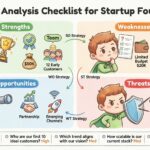
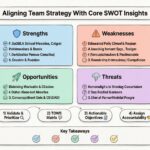
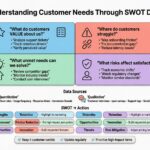
The SWOT analysis is a standard tool for strategic planning, but its application here is specific. You are not looking for growth opportunities alone; you are looking for vulnerabilities. Each quadrant of the SWOT matrix offers a different perspective on potential crisis points.
1. Strengths: Internal Resources as Shields
Strengths are what you do well. In the context of crisis prevention, these are your assets that can be mobilized during a downturn. Do you have a loyal customer base? Do you have a diversified revenue stream? These are your buffers. Identifying them allows you to lean on them when external pressure mounts.
- Customer Loyalty: A strong relationship with clients ensures repeat business even when marketing budgets are cut.
- Financial Reserves: Cash on hand acts as a shock absorber for unexpected expenses.
- Specialized Skills: Unique expertise makes your services harder to replace, reducing competitive pressure.
2. Weaknesses: Internal Gaps to Close
Weaknesses are internal limitations that hinder performance. In crisis prevention, these are the cracks in the foundation. If you rely on a single vendor, that is a weakness. If you have no documented processes, that is a weakness. Addressing these reduces the likelihood of internal failure.
- Single Point of Failure: Relying on one person for critical tasks creates a risk if they are unavailable.
- Outdated Systems: Manual processes slow down response times during emergencies.
- Debt Structure: High-interest short-term debt can cripple cash flow during slow periods.
3. Opportunities: External Conditions for Adaptation
Opportunities are external factors you can exploit. While often associated with growth, they can also serve as crisis exits. If a competitor exits the market, can you absorb their clients? If regulations change, can you adapt faster than others? Identifying these allows you to pivot rather than panic.
- Market Gaps: Unmet needs in the market allow for revenue diversification.
- Technological Shifts: New tools can improve efficiency and reduce operational costs.
- Partnerships: Collaborations can share the burden of risk and cost.
4. Threats: External Risks to Monitor
Threats are external factors that could cause trouble. These are the primary focus of crisis prevention. Economic downturns, new competitors, and supply chain issues are all threats. You cannot control them, but you can plan for them.
- Regulatory Changes: New laws may increase compliance costs.
- Economic Instability: Inflation or recession reduces customer spending power.
- Supplier Instability: Dependence on volatile vendors creates supply risks.
💰 Financial Defense Mechanisms
Financial health is the lifeblood of any organization. A crisis often manifests first as a cash flow problem. Preventing financial distress requires rigorous planning and discipline. You must ensure that your business can survive a period without significant income.
1. Building a Safety Net
Establishing an emergency fund is the first line of defense. This fund should cover at least three to six months of operating expenses. It is not for growth; it is for survival. Keeping this capital separate from daily transaction accounts ensures it is not accidentally spent.
- Expense Monitoring: Track every dollar spent. Identify areas where costs can be reduced without impacting quality.
- Debt Management: Prioritize paying off high-interest liabilities. Reduce reliance on credit lines.
- Revenue Diversification: Avoid relying on a single client for the majority of your income.
2. Cash Flow Forecasting
Forecasting is not just for investors. It is a vital tool for owners to anticipate shortages. By projecting cash flow for the next twelve months, you can identify months where expenses might exceed income. This allows you to take action before a shortfall occurs.
- Seasonal Adjustments: Account for seasonal dips in sales and plan accordingly.
- Payment Terms: Negotiate favorable terms with suppliers and encourage faster payments from clients.
- Contingency Budgets: Set aside a percentage of revenue for unexpected costs.
🏗️ Operational Continuity Planning
Operations are where work gets done. If operations stop, revenue stops. Crisis prevention in this area focuses on redundancy and documentation. You need systems that function even when key personnel are absent or technology fails.
1. Documentation and Standardization
Knowledge should not reside solely in the heads of specific employees. Documenting processes ensures that anyone can step in if necessary. This reduces dependency and protects the business from internal volatility.
- Standard Operating Procedures: Write down how critical tasks are performed.
- Access Management: Ensure multiple authorized users have access to essential accounts and data.
- Vendor Contracts: Review contracts to understand exit clauses and service level agreements.
2. Technology Resilience
Modern business relies heavily on technology. Downtime can be catastrophic. You need a strategy for data backup and system recovery. This does not require expensive enterprise software, but it does require a disciplined approach.
- Regular Backups: Maintain off-site backups of all critical data.
- Hardware Maintenance: Regularly update and replace aging equipment.
- Internet Redundancy: Have a secondary internet connection available for critical operations.
👥 Human Capital and Cultural Safeguards
People are the engine of your business. If your team is disengaged or unaware of risks, the business is vulnerable. A strong culture acts as a stabilizer during turbulent times. Employees who feel secure are more likely to contribute to solutions rather than add to problems.
1. Succession Planning
What happens if a key leader leaves unexpectedly? Succession planning ensures that roles can be filled without halting progress. This applies to ownership as well as management.
- Identify Key Roles: Map out which positions are critical for daily operations.
- Cross-Training: Train multiple employees to perform critical functions.
- Leadership Pipelines: Develop internal talent to step up into leadership roles.
2. Communication Channels
During a crisis, information must flow clearly. Ambiguity breeds panic. Establishing clear communication protocols ensures everyone knows what is happening and what is expected.
- Regular Updates: Schedule frequent meetings to discuss status and concerns.
- Crisis Protocols: Define who communicates what information during an emergency.
- Feedback Loops: Allow employees to report risks or issues without fear of retaliation.
🌍 External Market Shifts and Adaptability
External factors are often beyond your control, but they shape the environment in which you operate. Staying informed allows you to anticipate changes before they impact your bottom line. Adaptability is a form of prevention.
1. Competitive Intelligence
Knowing what your competitors are doing helps you anticipate market moves. If a competitor launches a new product, you can prepare a response. If they lower prices, you can adjust your value proposition.
- Monitor Competitors: Keep an eye on their pricing, marketing, and product launches.
- Customer Feedback: Listen to what customers say about competitors.
- Market Trends: Stay updated on industry reports and economic forecasts.
2. Regulatory Compliance
Laws and regulations change frequently. Non-compliance can lead to fines, lawsuits, or shutdowns. Proactive compliance management avoids these risks.
- Stay Informed: Subscribe to updates from relevant government agencies.
- Audit Readiness: Maintain records that make audits easier to conduct.
- Legal Counsel: Maintain a relationship with legal professionals for advice.
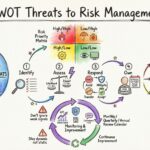
🔄 Continuous Monitoring and Review Cycles
Prevention is not a one-time task. The business environment is dynamic. What was a strength last year might be a weakness today. Regular reviews ensure your strategies remain effective.
1. Scheduled Risk Assessments
Set a calendar for reviewing your risk landscape. Quarterly reviews are often sufficient for small businesses. This keeps risk management top of mind.
- Review SWOT: Update your SWOT analysis regularly to reflect current conditions.
- Check KPIs: Monitor key performance indicators for early warning signs.
- Stakeholder Input: Gather feedback from employees and customers on emerging issues.
2. Scenario Planning
Scenario planning involves imagining different futures. What if your main supplier goes bankrupt? What if a pandemic occurs? Thinking through these scenarios helps you prepare responses.
- Worst-Case Scenarios: Plan for the most severe outcomes to ensure survival.
- Best-Case Scenarios: Prepare to capitalize on unexpected growth.
- Moderate Scenarios: Plan for typical fluctuations in the market.
📉 Mapping SWOT Elements to Specific Crisis Types
To visualize how the SWOT framework applies to specific risks, consider the following breakdown. This table helps align internal and external factors with potential crisis scenarios.
| SWOT Quadrant | Focus Area | Example Crisis Prevention Action |
|---|---|---|
| Strengths | Internal Assets | Leverage cash reserves to cover payroll during a sales dip. |
| Weaknesses | Internal Gaps | Document processes to prevent operational halt if a key staff member leaves. |
| Opportunities | External Growth | Pivot to online sales if physical retail locations become inaccessible. |
| Threats | External Risks | Diversify suppliers to mitigate risk if one vendor fails. |
Using this matrix ensures you are not overlooking any quadrant of your business landscape. Each quadrant offers a different angle for preventing specific types of disruptions.
🛠️ Practical Steps for Implementation
Knowing the theory is not enough. You need to execute. Here is a checklist to begin your crisis prevention journey immediately.
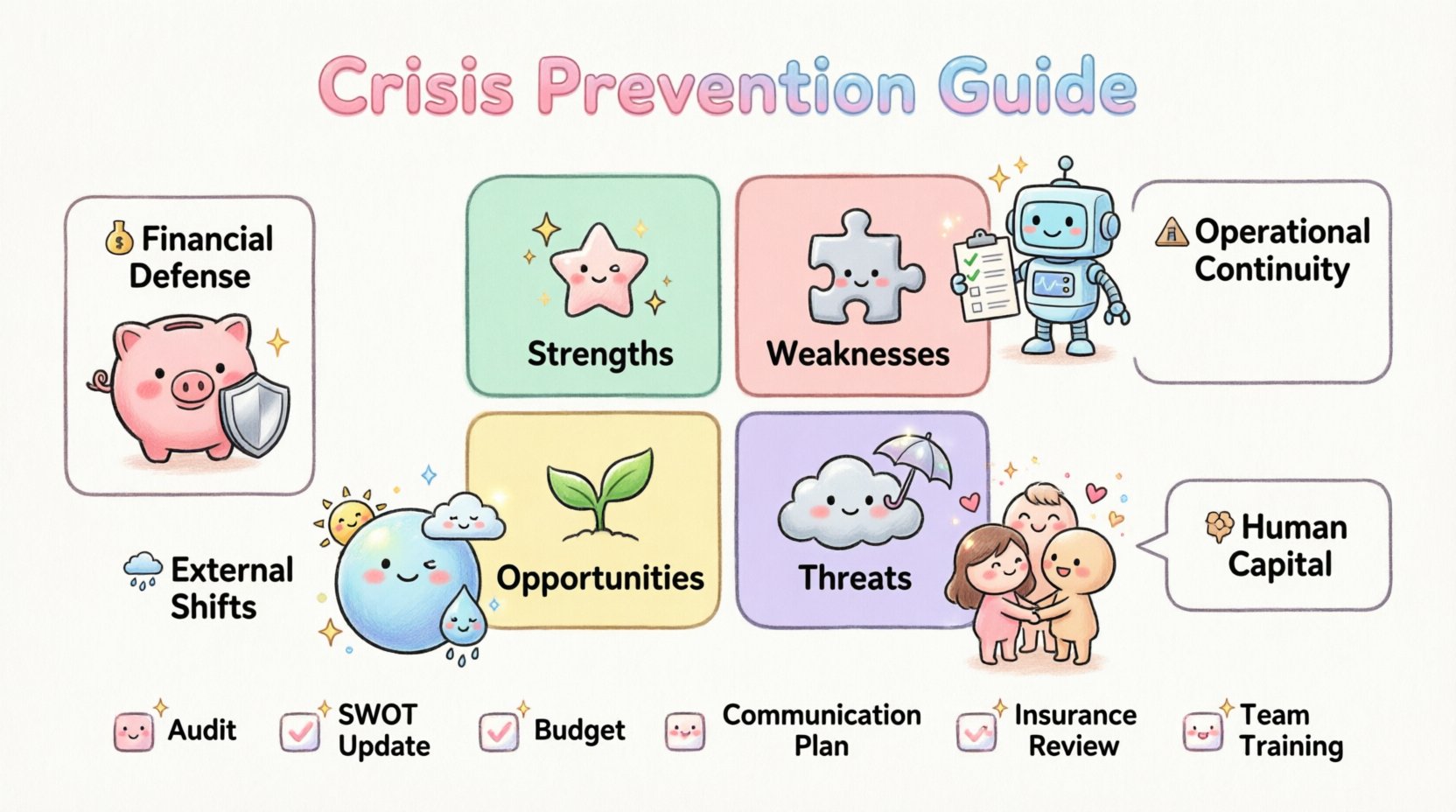
- Conduct a Full Audit: Review your financial statements, operational processes, and staff capabilities.
- Update Your SWOT: Hold a workshop with key stakeholders to identify current risks.
- Develop a Budget: Allocate funds specifically for risk mitigation and emergency reserves.
- Create a Communication Plan: Define how you will inform stakeholders during a crisis.
- Review Insurance: Ensure your coverage matches your current risk profile.
- Train Your Team: Educate employees on their roles during an emergency.
📈 Long-Term Resilience
Building a resilient business takes time. It requires consistent effort and a commitment to improvement. The goal is not to eliminate all risk, as that is impossible. The goal is to reduce the impact of negative events so they do not threaten the existence of the business.
When you integrate these strategies into your daily operations, you create a culture of preparedness. This culture becomes a competitive advantage. Clients and partners trust businesses that are stable and reliable. Investors prefer ventures that have managed their risks effectively.
Start with the SWOT analysis. Identify your weaknesses and threats. Then, build the financial and operational structures to neutralize them. This proactive stance gives you the confidence to focus on growth, knowing that your foundation is solid.
🔎 Final Thoughts on Risk Management
Business owners often view risk as something to be avoided. In reality, risk is an inherent part of commerce. The most successful enterprises are those that manage risk intelligently. By using the SWOT framework, you gain clarity on where you stand.
Remember that prevention is an ongoing process. Markets evolve, technology advances, and regulations change. Your strategy must evolve with them. Regularly revisit your plans. Update your data. Adjust your tactics. This vigilance is what separates thriving businesses from those that struggle.
Take the steps outlined here. Assess your current position. Strengthen your defenses. Build a plan that works for your specific context. With a solid strategy in place, you can navigate challenges with confidence and secure the future of your enterprise.
Focus on stability. Prioritize sustainability. Build for the long term. These principles will guide you through any storm.