

Founding a startup is a journey defined by uncertainty. You are navigating uncharted waters with limited resources and high stakes. In this environment, clarity is your most valuable asset. One of the most effective tools for gaining that clarity is the SWOT analysis. While often associated with established corporations, this framework is equally critical for early-stage ventures.
For first-time founders, a SWOT analysis serves as a reality check. It forces you to look inward at your capabilities and outward at the market landscape. It moves strategy from intuition to evidence. This guide provides a comprehensive checklist and framework to help you conduct a meaningful SWOT analysis without relying on expensive consultants or complex software.
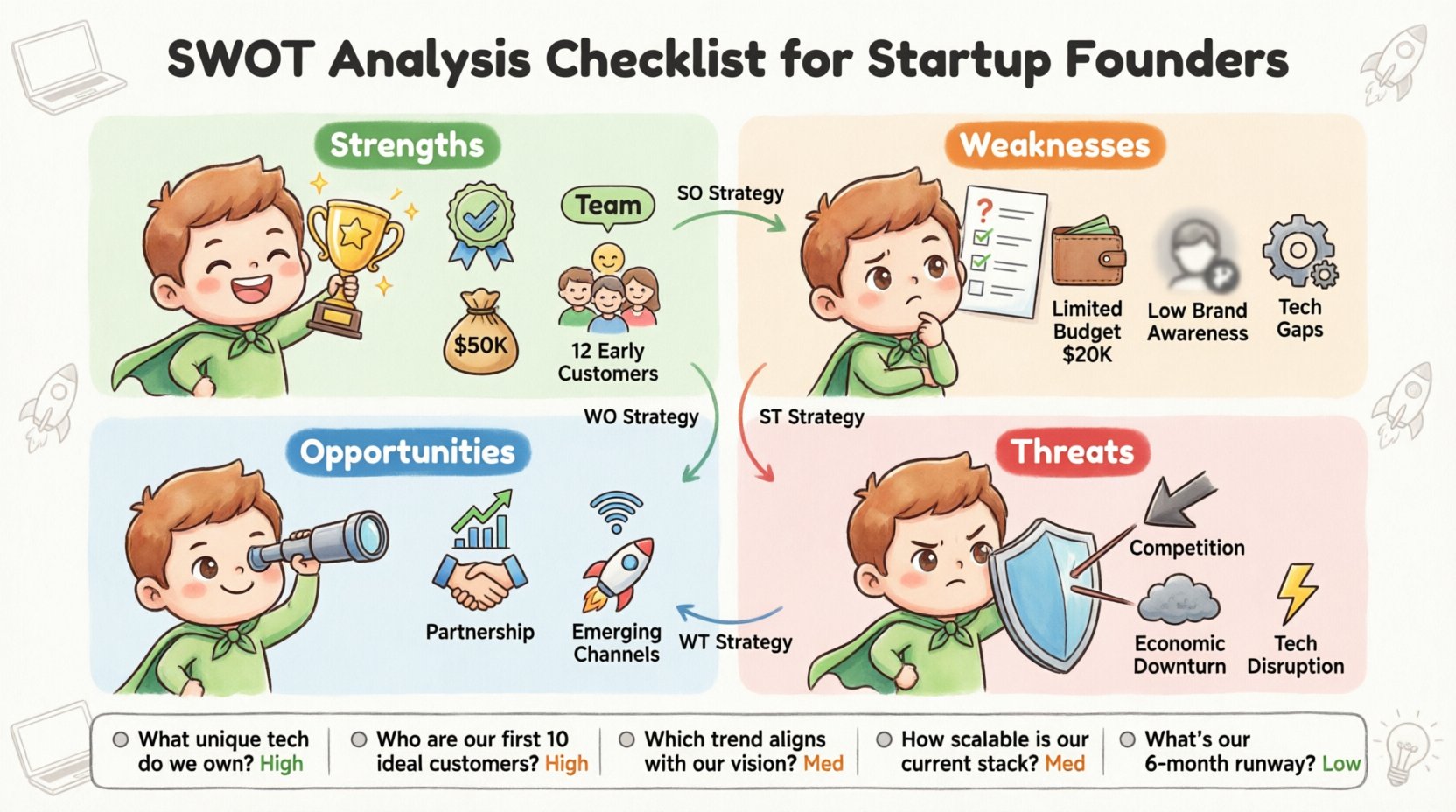
🧭 Understanding the SWOT Framework
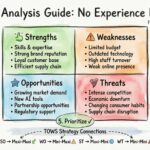
SWOT stands for Strengths, Weaknesses, Opportunities, and Threats. It is a strategic planning technique used to evaluate these four elements of a project or business venture. The framework divides factors into two categories: internal and external.
- Internal Factors: These are within your control. They include your team, technology, processes, and brand reputation.
- External Factors: These are outside your control. They include market trends, economic conditions, regulatory changes, and competitor actions.
When you map these out, you create a snapshot of your current position. This snapshot allows you to make informed decisions about where to allocate capital, where to hire talent, and where to pivot if necessary.
💪 Internal Factors: Strengths & Weaknesses
Internal factors define what you can do right now. They are the foundation of your operational reality. Being honest here is difficult but necessary. If you underestimate your weaknesses, you risk failure. If you overestimate your strengths, you risk misallocation of resources.
1. Strengths: What sets you apart?
Strengths are positive attributes that are within your control. For a startup, these are often the reasons investors choose you or customers choose your product. You need to identify tangible and intangible assets.
- Founder-Market Fit: Do you have unique experience or insight into the problem you are solving? Your background is a key differentiator.
- Intellectual Property: Do you have patents, trademarks, or proprietary algorithms? This creates a barrier to entry for others.
- Financial Runway: How long can you operate without additional revenue? Strong cash flow or significant seed funding is a major strength.
- Team Expertise: Does your co-founder team have complementary skills? A balanced team with technical, sales, and operational capabilities is vital.
- Early Adopters: Do you already have a waitlist or paying customers? Validation reduces risk.
- Culture: A strong, agile culture can outperform larger, slower competitors. If your team moves fast and executes well, that is a strength.
2. Weaknesses: Where are you vulnerable?
Weaknesses are negative attributes within your control. These are areas that hinder your progress or put you at a disadvantage compared to competitors. Addressing these is crucial before scaling.
- Limited Resources: Are you understaffed or underfunded? This limits your ability to execute quickly.
- Brand Awareness: Is the market unaware of your existence? Low visibility makes customer acquisition harder.
- Technology Gaps: Is your current tech stack scalable? Legacy code or unfinished infrastructure can slow development.
- Dependencies: Do you rely heavily on a single vendor or channel? This creates supply chain risk.
- Management Gaps: Are there leadership roles you cannot fill? Founders often struggle with delegation or lack specific functional expertise.
- Process Maturity: Do you have documented workflows? Lack of processes leads to chaos as you grow.
🌍 External Factors: Opportunities & Threats
External factors are forces you cannot control but must adapt to. A startup cannot survive if it ignores the market environment. These factors require monitoring and strategic adaptation.
3. Opportunities: Where can you grow?
Opportunities are external chances to improve your position. They often arise from changes in the market, technology, or society. Identifying these early allows you to position yourself as a leader.
- Market Trends: Is there a shift in consumer behavior that favors your solution? For example, a move toward remote work or sustainability.
- Competitor Mistakes: Are major players failing in a specific segment? This creates a gap you can fill.
- Regulatory Changes: Are new laws making compliance difficult for others but easy for you? Or vice versa?
- Partnerships: Are there potential alliances with larger companies that could distribute your product?
- Emerging Channels: Are new marketing platforms emerging that are cheaper or more effective than traditional ones?
- Geographic Expansion: Is there a demand for your product in other regions where competition is lower?
4. Threats: What could stop you?
Threats are external elements that could cause trouble for your business. These are often the most dangerous because they come from outside your direct influence. Mitigation strategies are essential.
- Competition: Are large incumbents entering your space? They have more resources to outspend you.
- Economic Downturns: Will a recession reduce customer spending on your product? Is it a luxury or a necessity?
- Technology Shifts: Could a new technology render your solution obsolete? For example, AI advancements changing how services are delivered.
- Supply Chain Issues: Are you dependent on hardware or materials that are subject to shortages?
- Regulatory Risks: Could future laws restrict your business model? Compliance costs can rise unexpectedly.
- Talent War: Is it becoming harder to hire the specific skills you need in your location?
📋 The Comprehensive Startup SWOT Checklist
Use the table below as a worksheet. Copy this list and fill it out for your specific venture. It covers the core areas you need to evaluate to build a robust strategic plan.
| Category | Key Question | Notes / Evidence | Priority (High/Med/Low) |
|---|---|---|---|
| Strengths | What unique value do we provide that others cannot? | ||
| Strengths | Do we have a competitive cost advantage? | ||
| Strengths | Is our team structure optimized for speed? | ||
| Weaknesses | What are our biggest operational bottlenecks? | ||
| Weaknesses | Where do we lack funding or cash reserves? | ||
| Weaknesses | Are there skills missing from the founding team? | ||
| Opportunities | Is there a gap in the market competitors are ignoring? | ||
| Opportunities | Can we leverage existing partnerships for growth? | ||
| Opportunities | Are there new regulations favoring our solution? | ||
| Threats | Who are the direct and indirect competitors? | ||
| Threats | How sensitive is our customer base to price increases? | ||
| Threats | What happens if our main funding source dries up? |
🛠️ How to Execute Your Analysis
Creating the list is only the first step. The real value comes from the process of discussion and analysis. Here is a step-by-step approach to running a SWOT workshop.
1. Gather the Right Stakeholders
Do not do this alone. You need diverse perspectives. Include co-founders, key advisors, or even early employees. Different roles see different risks and strengths. A sales lead might see a market opportunity you missed. A developer might spot a technical weakness you ignored.
2. Set a Time Limit
Analysis paralysis is real. Set a timer for your session. A 90-minute focused workshop is often enough to get the core data. If you run too long, energy drops and the quality of insights suffers.
3. Separate Fact from Opinion
Every point entered into the SWOT must be backed by data or observation. Instead of writing “Good Team,” write “Team has 10 years of combined industry experience.” Instead of “High Competition,” write “Three major players hold 60% market share.” Quantifiable data reduces bias.
4. Prioritize the List
You cannot fix everything at once. Rate each item on the list based on impact. A high-impact weakness that blocks growth needs immediate attention. A low-impact strength can be maintained with minimal effort. Focus your energy where it matters most.
5. Document and Share
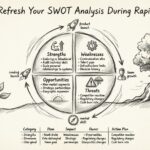
Keep a living document. SWOT is not a one-time event. Share this with your investors and board if appropriate. It shows you understand your business landscape. Update it quarterly or whenever a major pivot occurs.
⚠️ Common Pitfalls to Avoid
Founders often make mistakes when applying this framework. Being aware of these traps will help you get better results.
- Being Too Vague: “Good product” is not a strength. “Proprietary algorithm that reduces processing time by 50%” is. Specificity drives action.
- Confusing Internal and External: A threat is external. Saying “Our team is small” is a weakness, not a threat. A threat would be “We cannot hire enough people due to market shortage.” Keep the distinction clear.
- Ignoring the Negative: It is tempting to only list strengths and opportunities. This creates a false sense of security. You must be willing to confront weaknesses and threats head-on.
- Creating a Static Document: The market changes rapidly. A SWOT done six months ago might be obsolete today. Treat it as a dynamic tool.
- Lack of Follow-Through: Identifying a threat is useless if you do not have a mitigation plan. Every Threat should ideally link to a Strategy. Every Weakness should link to an Improvement Plan.
🔄 Turning Insights into Strategy
The goal of the SWOT analysis is not to create a report to sit on a shelf. It is to inform decision-making. Once you have the data, you need to convert it into action. This involves matching your internal capabilities with external possibilities.
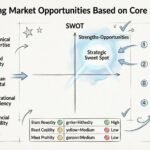
For example, if you have a Strength in fast development and an Opportunity in a new market trend, you should double down on speed to capture that market. If you have a Weakness in marketing and a Threat from a competitor’s ad spend, you might need to find a niche where they are not active or partner with an influencer.
Consider the following strategic pairings:
- SO Strategies: Use strengths to take advantage of opportunities. This is growth mode.
- WO Strategies: Overcome weaknesses by taking advantage of opportunities. This is improvement mode.
- ST Strategies: Use strengths to avoid threats. This is defensive mode.
- WT Strategies: Minimize weaknesses and avoid threats. This is survival mode.
Reviewing these pairings helps you allocate resources logically. If you are in survival mode, you cut costs. If you are in growth mode, you invest in acquisition. The SWOT analysis provides the context needed to make these choices.
📈 Integrating SWOT into Your Business Plan
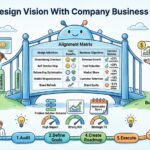
When you pitch to investors or draft your official business plan, you do not need to include the entire SWOT matrix. Instead, use the insights to shape your narrative.
When discussing your strategy, reference the opportunities you identified. “We identified a gap in the logistics sector, which is why we focused on X.” When discussing risks, reference the threats. “We are aware of the supply chain risks, which is why we diversified our vendors.” This shows investors that you have done your homework and are prepared for challenges.
Your financial projections should also reflect the analysis. If you identified a threat of rising customer acquisition costs, your projections should account for that increase. If you identified a strength in low operational costs, your margins should reflect that efficiency.
🔍 Continuous Monitoring
Once the analysis is complete, set up a system to monitor the factors you identified. You need to know when a threat becomes a reality or when an opportunity fades. Create a dashboard or a simple spreadsheet to track key indicators.
For example, track competitor pricing monthly. Monitor government regulation updates weekly. Keep an eye on your cash burn rate daily. By staying alert, you can react to changes before they become crises. This proactive stance is what separates resilient startups from those that fail unexpectedly.
Remember, the SWOT analysis is a tool for clarity. It does not guarantee success, but it removes blindness. For first-time founders, removing blindness is the first step toward building a sustainable, long-term business.