Every organization encounters friction points. These are the operational weaknesses that slow down progress, increase costs, or reduce quality. Identifying them is the first step, but transforming them into concrete improvement plans is where true strategic maturity begins. This guide explores the mechanics of analyzing internal deficiencies using the SWOT framework and converting them into actionable strategies.
Understanding Operational Weaknesses 🧐
Operational weaknesses are internal factors that place an organization at a disadvantage relative to others. Unlike external threats, these are issues you have the power to control and fix. They often hide in plain sight, masked by routine processes or accepted inefficiencies.
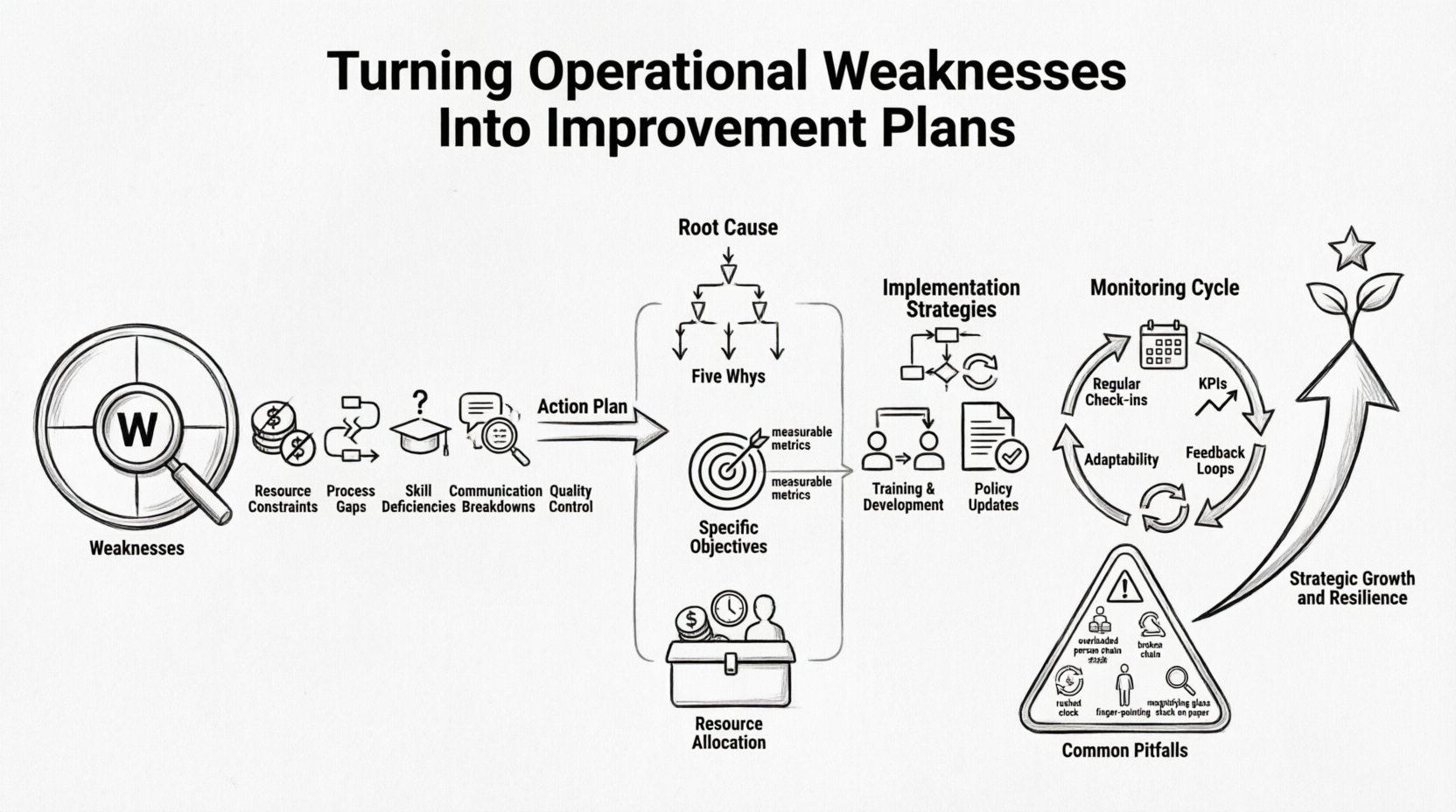
- Resource Constraints: Limited budget, staffing shortages, or outdated technology.
- Process Gaps: Redundant steps, unclear workflows, or lack of standardization.
- Skill Deficiencies: Teams lacking specific expertise or training opportunities.
- Communication Breakdowns: Siloed information or poor cross-departmental collaboration.
- Quality Control: Inconsistent output or high error rates in production.
Recognizing these elements requires honesty and a willingness to look inward without assigning blame. The goal is not to shame the team, but to improve the system they operate within.
The Role of SWOT Analysis in Diagnosis 📊
The SWOT framework (Strengths, Weaknesses, Opportunities, Threats) provides a structured lens for this diagnosis. While often used for high-level strategy, its application to operational weaknesses is precise.
When focusing on the ‘W’ in SWOT, the objective is to gather data that is factual rather than opinion-based. This involves:
- Quantitative Data: Reviewing performance metrics, error rates, and turnaround times.
- Qualitative Feedback: Gathering input from employees who execute the daily tasks.
- Customer Sentiment: Analyzing complaints or feedback that point to systemic issues.
- Competitor Benchmarking: Comparing your processes against industry standards to find gaps.
This phase ensures that the weaknesses identified are real problems affecting the bottom line, rather than perceived issues based on anecdotal evidence.
Categorizing Weaknesses for Clarity 🗂️
Not all weaknesses carry the same weight. Some are critical bottlenecks, while others are minor irritations. Categorizing them helps prioritize resources effectively.
| Category | Example | Impact Level | Fix Complexity |
|---|---|---|---|
| Financial | High overhead costs | High | Medium |
| Technological | Outdated legacy systems | High | High |
| Human Capital | High turnover rate | Medium | Medium |
| Process | Manual data entry errors | Medium | Low |
| Strategic | Lack of clear vision | High | High |
By mapping weaknesses to these categories, leadership can see where the biggest risks lie and where quick wins might be available.
Converting Weaknesses into Action Plans 🛠️
Identification is only half the battle. The second half is creating a plan that addresses the root cause. A robust improvement plan moves from the abstract to the specific.
1. Define the Root Cause
Before fixing, understand why the issue exists. Use techniques like the “Five Whys” to dig deeper.
- Problem: Project deadlines are missed.
- Why? Tasks are not completed on time.
- Why? Team members are waiting on approvals.
- Why? Approval authority is centralized to one person.
- Root Cause: Bottleneck in decision-making hierarchy.
2. Set Specific Objectives
Goals should be measurable. Vague aspirations like “improve efficiency” are difficult to track. Instead, aim for:
- Reduce approval time by 50% within three months.
- Decrease error rates in data entry by 15% in Q1.
- Train 100% of staff on new protocols by December.
3. Allocate Resources
Improvement plans require investment. This might mean budget for training, time for process redesign, or personnel for project management. Ensure the plan is resourced, or it will remain theoretical.
- Financial: Budget for new tools or external consultants.
- Time: Dedicate specific hours for improvement work.
- Personnel: Assign a champion to lead the initiative.
Implementation Strategies 💪
Once the plan is drafted, execution becomes the priority. Different weaknesses require different approaches.
Process Reengineering
If the weakness lies in workflow, consider mapping the entire process from start to finish. Identify steps that add no value and remove them. Streamline handoffs between departments to prevent information loss.
Training and Development
When skills are the bottleneck, invest in upskilling. This does not always mean expensive courses. Peer-to-peer learning, internal workshops, and mentorship programs can bridge gaps effectively.
Policy Updates
Sometimes weaknesses stem from outdated rules. Review policies regularly to ensure they align with current operational realities. Remove bureaucratic hurdles that slow down execution.
Monitoring and Review 🔄
An improvement plan is not a set-and-forget document. It requires ongoing oversight to ensure it stays on track.
- Regular Check-ins: Schedule weekly or monthly reviews to assess progress against milestones.
- Key Performance Indicators (KPIs): Track the metrics defined in the objective phase.
- Feedback Loops: Allow teams to report if the changes are creating new friction.
- Adaptability: Be willing to pivot if the initial approach is not yielding results.
Transparency is key. Share progress updates with the wider organization to maintain momentum and trust.
Common Pitfalls to Avoid ⚠️
Even with a solid plan, organizations often stumble. Awareness of common traps helps navigate the journey smoothly.
- Overloading the Team: Trying to fix too many weaknesses at once leads to burnout. Focus on high-impact areas first.
- Ignoring Culture: Technical fixes fail if the culture resists change. Engage employees early and often.
- Setting Unrealistic Timelines: Rushing improvements often leads to shortcuts and recurring errors. Build in buffer time.
- Blaming Individuals: Focus on systemic fixes. If a person fails repeatedly, look at the process that failed them.
- Stopping at Analysis: Do not let the analysis phase become an end goal. Action is the only metric that matters.
Real-World Application Example 🏢
Consider a manufacturing firm facing high waste levels. The weakness is clear, but the improvement plan requires depth.
- Analysis: Data shows waste occurs primarily during the setup phase of machinery.
- Root Cause: Operators lack standardized setup checklists and receive inconsistent training.
- Plan: Develop a digital checklist, create video guides for setup, and schedule refresher training.
- Execution: Roll out the checklist over one month while training occurs.
- Review: Monitor waste levels weekly. If waste drops, standardize the process. If not, investigate further.
This approach turns a vague operational weakness into a targeted, measurable improvement initiative.
Sustaining the Momentum 🚀
Once a weakness is addressed, the organization should not return to the old ways. Sustainability involves embedding the new processes into the organizational DNA.
- Documentation: Update standard operating procedures (SOPs) to reflect the new methods.
- Onboarding: Include the new processes in training materials for new hires.
- Recognition: Acknowledge teams that successfully implement improvements.
- Continuous Improvement: Make the review of weaknesses a recurring agenda item, not a one-time event.
By treating operational weaknesses as opportunities for growth, organizations build resilience. They become better equipped to handle future challenges because they have a proven method for fixing internal issues.
Final Thoughts on Strategic Growth 🌱
The path from weakness to strength is not linear. It requires patience, data, and a commitment to change. By leveraging the SWOT framework and following a disciplined approach to improvement planning, leaders can turn internal friction into fuel for progress.
Start by looking at your current operations with a critical eye. Identify the gaps. Build the plan. Execute with discipline. The result is a more efficient, robust, and competitive organization.