
The landscape of user experience design is constantly shifting. New tools emerge, user expectations evolve, and design systems become more complex. In this dynamic environment, the role of a senior designer extends beyond their own output. One of the most impactful responsibilities a seasoned professional can take on is guiding the next generation. Mentoring junior designers is not just about teaching them how to use specific tools or draw better wireframes. It is about fostering critical thinking, building confidence, and navigating the professional landscape of design. This guide explores the practical, human-centric approach required to nurture talent and ensure sustainable career growth within your team.
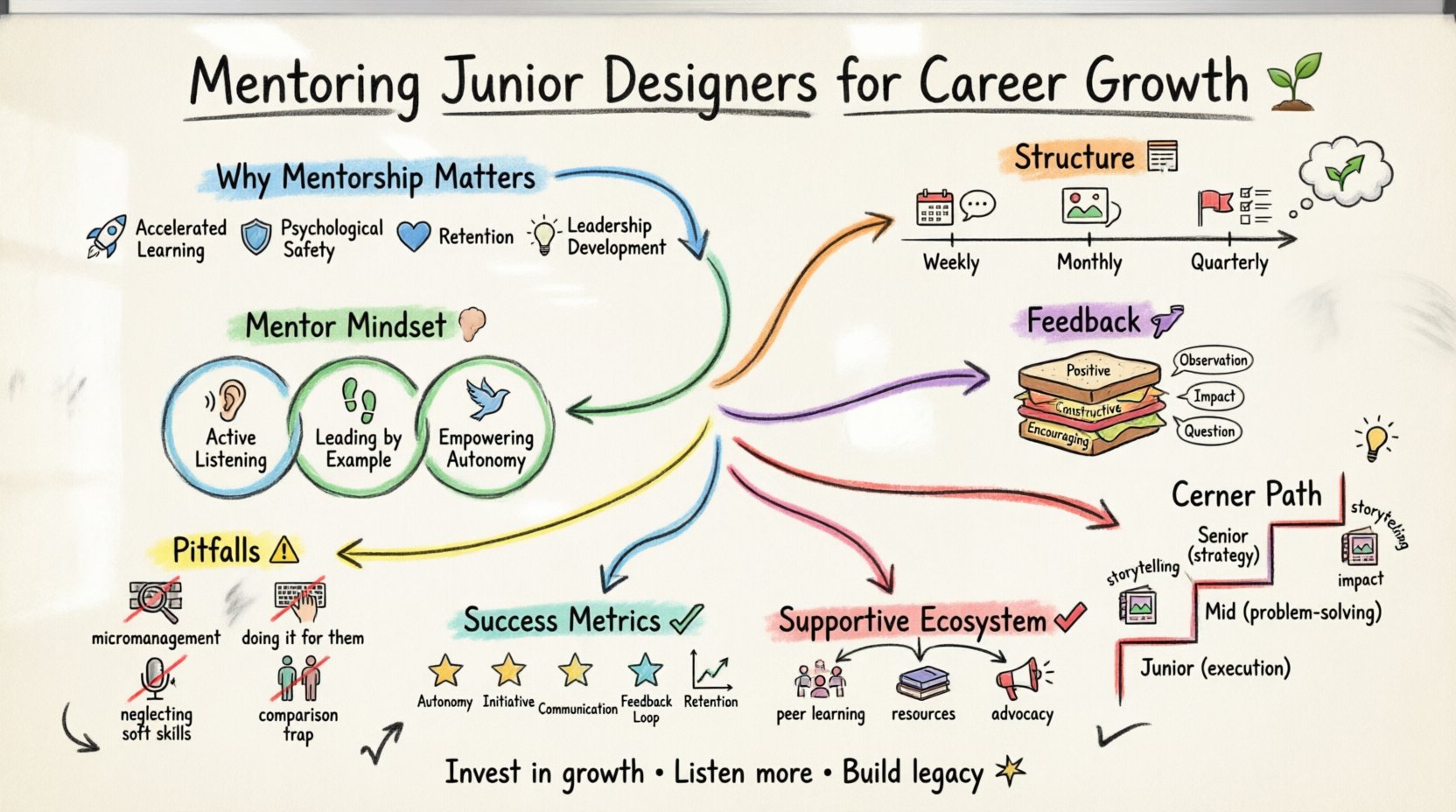
Why Mentorship Matters in UX 🌱
Design is an iterative craft that relies heavily on feedback and reflection. Junior designers often possess raw talent and creativity but lack the context that comes with years of shipping products. Without guidance, they may struggle to understand the business implications of their decisions or how to communicate their rationale to stakeholders. Mentorship bridges this gap.
- Accelerated Learning: A mentor can shortcut years of trial and error by sharing lessons learned from past projects.
- Psychological Safety: Knowing you have a supportive figure to turn to reduces anxiety and encourages risk-taking, which is essential for innovation.
- Retention: Designers who feel invested in are more likely to stay with a company. Mentorship signals that the organization values their long-term future.
- Leadership Development: For the senior designer, mentoring sharpens communication skills and deepens their own understanding of the craft.
When done correctly, mentorship transforms a junior designer from a task-doer into a strategic partner. It shifts the focus from output to outcome.
The Mentor Mindset 🧠
Before establishing a formal structure, the foundation of mentorship lies in the mindset of the senior designer. This role requires a shift from being the hero of the project to being the coach on the sidelines. It involves patience, empathy, and a willingness to let others make mistakes.
1. Active Listening Over Immediate Correction
When a junior designer presents a concept, the instinct might be to point out flaws immediately. However, effective mentorship prioritizes understanding the thinking process behind the design. Ask questions like, “What problem are you trying to solve?” or “What alternatives did you consider?” This encourages the junior designer to self-critique before you offer your perspective.
2. Leading by Example
Actions speak louder than advice. If you want your mentee to write clear documentation, ensure your own tickets are detailed. If you value inclusive design, demonstrate how you conduct research with diverse participants. Your behavior sets the standard for the team culture.
3. Empowering Autonomy
The goal is to work yourself out of a job regarding that specific task. Gradually reduce the level of oversight. Start by reviewing every step, then move to reviewing the final output, and finally, trust them to own the project end-to-end with a post-mortem check-in.
Structuring the Relationship 📅
Informal catch-ups are valuable, but structured mentorship yields better results. A clear framework ensures that time is spent productively and that progress is measurable. Below is a recommended cadence for a mentorship program.
Weekly Check-ins
These sessions should be dedicated to professional development, not just status updates on current tasks. Keep them focused on growth.
- Duration: 30 to 45 minutes.
- Topics: Skill gaps, career goals, work-life balance, and recent challenges.
- Format: One-on-one conversation, possibly with a shared document for notes.
Monthly Deep Dives
Once a month, take a broader look at the work being produced. This is the time for portfolio reviews or case study critiques.
- Focus: Quality of work, alignment with company goals, and storytelling.
- Activity: Reviewing a specific project from end to end.
Quarterly Goals
Set specific objectives for the next three months. These should be challenging but achievable.
- Example: Lead a design workshop, present a case study to leadership, or mentor a new intern.
- Review: At the end of the quarter, assess what was accomplished and adjust for the next period.
Consistency is key. If you miss a meeting, reschedule it. Reliability builds trust.
Delivering Constructive Feedback 🗣️
Feedback is the lifeblood of design growth. However, it is often the most uncomfortable part of the job. Junior designers can take feedback personally if it is not delivered with care. The objective is to critique the work, not the person.
Creating Psychological Safety
Before critiquing, establish an environment where mistakes are viewed as learning opportunities. Normalize the phrase, “Let’s look at this together.” When a designer feels safe, they are more receptive to feedback and less defensive.
The Feedback Sandwich Technique
While sometimes overused, the structure of sandwiching critique between positive reinforcement can be effective if done genuinely.
- Positive Opening: Start with what worked well. “I really like how you handled the navigation hierarchy here. It feels intuitive.”
- Constructive Critique: Address the area for improvement with specific context. “However, the contrast on the primary button might not meet accessibility standards for users with low vision.”
- Encouraging Close: End on a forward-looking note. “Let’s adjust the color palette and I’m confident it will look great.”
Specific Feedback Models
Generic feedback like “make it pop” is unhelpful. Use frameworks that provide clarity.
| Feedback Type | Example Phrase | Why It Works |
|---|---|---|
| Observation | “I noticed the user had to click three times to complete the task.” | Focuses on data and facts, not opinion. |
| Impact | “This increases the friction for the user.” | Connects the design decision to the user outcome. |
| Question | “What was the goal of this interaction flow?” | Invites reflection rather than dictating the answer. |
When reviewing designs, focus on the “why” behind the “what.” Ask the designer to walk you through their decisions. This often reveals gaps in their reasoning that you can address through discussion rather than direct instruction.
Navigating Career Trajectories 🛣️
A mentor must help a junior designer see the path ahead. Design roles are often vague regarding progression. Is the next step Senior Designer? Product Designer? Design Manager? Clarifying these paths helps the junior designer understand what skills to prioritize.
Defining Competency Levels
Help the mentee understand the difference between a Junior, Mid, and Senior level. This is not about years of experience, but about scope and autonomy.
- Junior: Focuses on execution. They take clear briefs and produce high-quality assets. They ask for help frequently.
- Mid-Level: Focuses on problem-solving. They can take a vague problem and define the solution. They advocate for design decisions.
- Senior: Focuses on strategy. They understand the business goals and align design to them. They mentor others and set the direction.
Portfolio Development
A strong portfolio is essential for career advancement. However, it is not just a gallery of pretty pictures. It is a record of thinking.
- Storytelling: Teach the mentee to write case studies that explain the problem, the constraints, the solution, and the result.
- Process: Emphasize showing the messy middle. Show sketches, failed iterations, and user research quotes.
- Impact: Encourage them to quantify results where possible. “Improved conversion by 10%” is stronger than “Made the button blue.”
Common Pitfalls to Avoid ⚠️
Even well-intentioned mentors can hinder growth by falling into common traps. Being aware of these behaviors is crucial for maintaining a healthy relationship.
1. Micromanagement
Controlling every pixel prevents the junior designer from developing their own style and decision-making muscles. If you feel the urge to redo their work, pause. Ask yourself if you are solving the problem for them or teaching them how to solve it.
2. Doing the Work for Them
It is faster to design the screen yourself than to explain the concept. Resist this temptation. The time invested in teaching now saves time in the long run because the mentee becomes independent.
3. Neglecting Soft Skills
Design is a team sport. A designer who cannot communicate their ideas effectively will struggle regardless of their visual skills. Mentor them on how to present in meetings, how to handle pushback from stakeholders, and how to collaborate with engineers.
4. Comparing Them to Others
Never compare a junior designer to a senior designer or another colleague. Everyone has a unique pace of growth. Comparison breeds insecurity and discourages creativity.
Defining Success Metrics 📊
How do you know if the mentorship is working? It is not just about the quality of the final design. Look for indicators of professional maturity.
- Autonomy: Does the mentee come to you with solutions, or just problems?
- Initiative: Are they volunteering for projects or asking for new responsibilities?
- Communication: Are they speaking up in meetings and defending their design choices?
- Feedback Loop: Do they actively seek feedback and apply it to future work?
- Retention: Does the mentee feel engaged and motivated to stay with the team?
Regularly ask the mentee for feedback on your mentorship as well. “Is this cadence working for you?” “Do you feel supported?” This models the behavior of continuous improvement.
Building a Supportive Ecosystem 🏗️
Mentorship does not happen in a vacuum. It is part of a broader culture. As a senior designer, you influence the team environment.
Encourage Peer Learning
Don’t be the only source of knowledge. Facilitate design critiques where junior designers present to the whole team. This exposes them to different perspectives and builds their confidence in public speaking.
Share Resources
Curate a list of books, articles, podcasts, and talks relevant to UX. A simple document with recommended reading shows you care about their intellectual growth outside of daily tasks.
Advocate for Them
When the time comes for promotions or salary reviews, speak up for your mentee. Highlight their achievements and the growth they have demonstrated. Your endorsement carries weight.
Final Thoughts on Growth 🌟
Mentoring junior designers is a commitment. It requires time, energy, and emotional intelligence. It is not always linear. There will be plateaus and setbacks. However, the reward is seeing a professional blossom into their own potential. When you invest in your team, you elevate the entire organization. You build a legacy that outlasts any single project or design system.
Start small. Pick one junior designer. Schedule a time. Listen more than you speak. The journey of a thousand miles begins with a single step. Your guidance could be the difference between a designer leaving the field or staying to shape the digital world for years to come.