
The landscape of customer experience is shifting rapidly. Organizations are moving away from static diagrams and linear paths toward dynamic, data-driven ecosystems. As technology evolves, the way we visualize and manage customer interactions changes fundamentally. This guide explores the critical developments shaping the next generation of customer journey mapping technology. We examine how data integration, artificial intelligence, and privacy regulations are redefining the process.
From Static Maps to Dynamic Orchestration 🔄
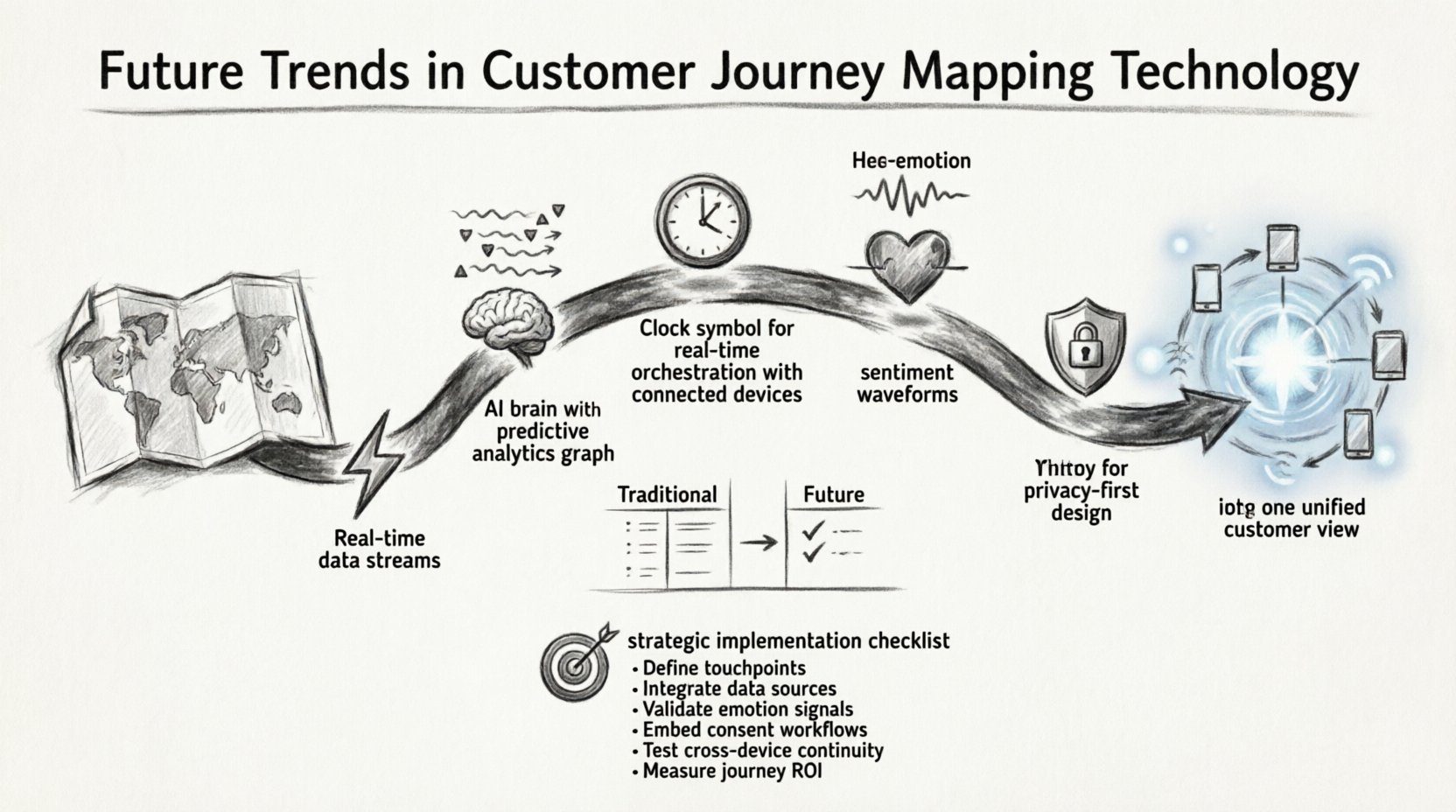
Traditionally, journey maps were static documents created during workshops. They represented a snapshot in time, often based on qualitative research and assumptions. Today, the technology supports continuous updates. Maps are no longer one-time deliverables but living documents that reflect real-time behavior.
- Real-Time Data Feeds: Modern systems ingest data streams from websites, mobile apps, and support channels instantly.
- Automated Updates: Algorithms adjust touchpoints based on actual user actions rather than hypothesized paths.
- Segmentation: Different customer personas receive different mapped journeys automatically based on their attributes.
This shift allows teams to identify friction points as they occur. Instead of waiting for a quarterly review, stakeholders can address issues within hours. The technology facilitates a feedback loop where mapping informs strategy, and strategy outcomes feed back into the map.
Integration of Artificial Intelligence and Predictive Analytics 🤖
Artificial intelligence is not just a buzzword; it is a functional component of modern journey technology. Machine learning models analyze vast datasets to predict future behaviors. This moves the discipline from descriptive analytics to predictive and prescriptive insights.
How AI Enhances Mapping
- Prediction of Drop-off Points: Models identify where customers are likely to abandon a process before it happens.
- Personalization at Scale: Systems recommend specific next-best-actions for individual users based on historical patterns.
- Churn Prediction: Algorithms flag accounts at risk of leaving, allowing for proactive intervention.
The integration of these capabilities requires robust data infrastructure. Data quality is paramount. Inaccurate inputs lead to unreliable predictions. Organizations must ensure their data governance frameworks are aligned with these technological advancements. When implemented correctly, AI reduces the time spent on manual analysis and highlights opportunities that human observation might miss.
Real-Time Journey Orchestration ⏱️
Customer expectations for immediacy are at an all-time high. They expect seamless interactions across devices without interruption. Technology now enables real-time orchestration, where triggers activate specific responses based on context.
- Context-Aware Triggers: Actions are initiated based on location, time of day, or device type.
- Instant Gratification: Systems can deliver content or support immediately after a specific interaction.
- Cross-Channel Continuity: A conversation started on chat can continue on email without the customer repeating information.
This requires deep integration between marketing platforms, CRM systems, and operational databases. The goal is to create a unified view of the customer state. When a user interacts, the system knows their history and current intent. This reduces friction and increases satisfaction.
Emotional Intelligence and Sentiment Analysis 🧠
Traditional mapping focused on actions: clicks, taps, and purchases. Future trends prioritize the emotional state of the customer during these interactions. Technology now incorporates sentiment analysis to gauge feelings at every touchpoint.
- Natural Language Processing: Analyzes text from reviews, support tickets, and social media to detect frustration or delight.
- Voice and Tone Analysis: Speech recognition tools evaluate customer tone during phone interactions.
- Micro-Feedback Loops: Short surveys embedded in the journey capture immediate emotional responses.
Understanding emotion allows for better empathy in service design. If a user expresses frustration during a checkout process, the system can offer assistance or a discount. This humanizes the digital experience. It bridges the gap between functional utility and emotional connection.
Privacy-First Data Collection 🔒
Regulatory frameworks like GDPR and CCPA have changed how data is collected and used. Privacy is no longer an afterthought; it is a core requirement of journey mapping technology.
- Consent Management: Systems must track user permissions for data processing.
- Data Anonymization: Techniques ensure individual identities are protected while aggregate data is analyzed.
- Right to be Forgotten: Tools must be capable of deleting specific user data upon request.
Organizations must build trust by being transparent. Customers are increasingly aware of their digital footprint. Technology that respects privacy boundaries tends to yield higher engagement rates. The future of mapping involves balancing deep insights with strict compliance standards. This requires architectural changes to how data is stored and accessed.
Omnichannel Unification 📱
Customers do not view channels as separate entities. They switch between mobile, desktop, social, and physical stores fluidly. Mapping technology must reflect this non-linear reality.
- Single Customer View: A unified identifier links interactions across all platforms.
- Channel Attribution: Understanding which channel influenced the final decision.
- Seamless Handoffs: Ensuring context transfers correctly when moving from one channel to another.
A disjointed experience damages brand reputation. If a customer tells a support agent about an issue they just saw on social media, the agent should know. Technology facilitates this visibility. It aggregates data from disparate sources into a coherent narrative.
Table: Traditional vs. Future Journey Mapping Capabilities 📊
| Feature | Traditional Approach | Future Technology |
|---|---|---|
| Data Source | Qualitative surveys, interviews | Real-time behavioral data, IoT, logs |
| Update Frequency | Annual or quarterly | Continuous, real-time |
| Scope | Single channel or linear | Omnichannel, non-linear, contextual |
| Insight Type | Descriptive (what happened) | Predictive (what will happen) |
| Privacy | Secondary consideration | Core design principle |
| Automation | Manual updates | Algorithmic adjustments |
Integration with Operational Systems 🛠️
Mapping is useless if it does not drive action. Future technology integrates directly with operational tools. This ensures that insights lead to immediate changes.
- CRM Integration: Updates customer profiles automatically based on journey milestones.
- Marketing Automation: Triggers campaigns based on journey stage.
- Support Ticketing: Routes inquiries based on predicted needs.
This connectivity reduces silos between departments. Marketing, sales, and support operate from the same source of truth. It aligns organizational goals with customer needs. The technology acts as a central nervous system for customer experience.
The Role of Employee Experience 🤝
Customer journey mapping is expanding to include employee experience. Happy employees create happy customers. Technology now maps the internal journey of staff members as well.
- Internal Feedback Loops: Employees report friction in their tools and processes.
- Empathy Training: Systems highlight customer pain points to staff via dashboards.
- Workflow Optimization: Identifying bottlenecks in internal processes that delay customer resolution.
When employees have the right tools and information, they serve customers better. Mapping the employee journey helps organizations understand where support is needed. It aligns internal culture with external promises.
Challenges and Ethical Considerations ⚖️
As technology becomes more powerful, ethical considerations become more critical. Organizations must navigate the fine line between personalization and intrusion.
- Data Security: Protecting sensitive information from breaches is essential.
- Algorithmic Bias: Ensuring models do not discriminate against specific user groups.
- Transparency: Users should know how their data shapes their experience.
Building a reputation for ethical data use is a competitive advantage. Customers prefer brands they can trust. Ignoring these risks can lead to regulatory fines and brand damage. Governance frameworks must evolve alongside technology.
Preparing Your Strategy 🎯
Adopting these trends requires a strategic approach. It is not just about buying new tools; it is about changing processes.
- Audit Current Data: Assess the quality and availability of existing information.
- Define Goals: Clarify what success looks like for journey mapping.
- Invest in Training: Ensure teams understand how to interpret new data types.
- Start Small: Pilot new capabilities on specific segments before scaling.
Change management is vital. Stakeholders need to understand the value of dynamic mapping. It requires a shift in mindset from planning to monitoring. Organizations that adapt quickly will gain a significant advantage in customer retention and acquisition.
Conclusion on Strategic Implementation 🚀
The evolution of customer journey mapping technology is driven by the need for deeper understanding and faster response. From static diagrams to dynamic, AI-enhanced orchestration, the field is maturing rapidly. Privacy, emotion, and omnichannel integration are now central pillars of the discipline.
Organizations that invest in these capabilities position themselves for long-term success. They build experiences that are relevant, timely, and respectful. The technology serves as an enabler, but the strategy determines the outcome. Continuous learning and adaptation remain the keys to navigating this landscape.