Securing a position in user experience design is a competitive process. It requires more than just a polished portfolio or a list of tools you can use. Hiring managers are looking for problem solvers, empathetic thinkers, and collaborators who understand the business impact of design decisions. Unfortunately, many talented candidates stumble during the interview phase due to avoidable errors.
This guide outlines the specific pitfalls that frequently occur during UX interviews. By understanding what not to do, you can refine your approach and present your work with clarity and confidence. We will cover portfolio presentation, storytelling, process transparency, and soft skills, ensuring you are prepared for the challenges ahead.
📁 Portfolio Presentation Mistakes
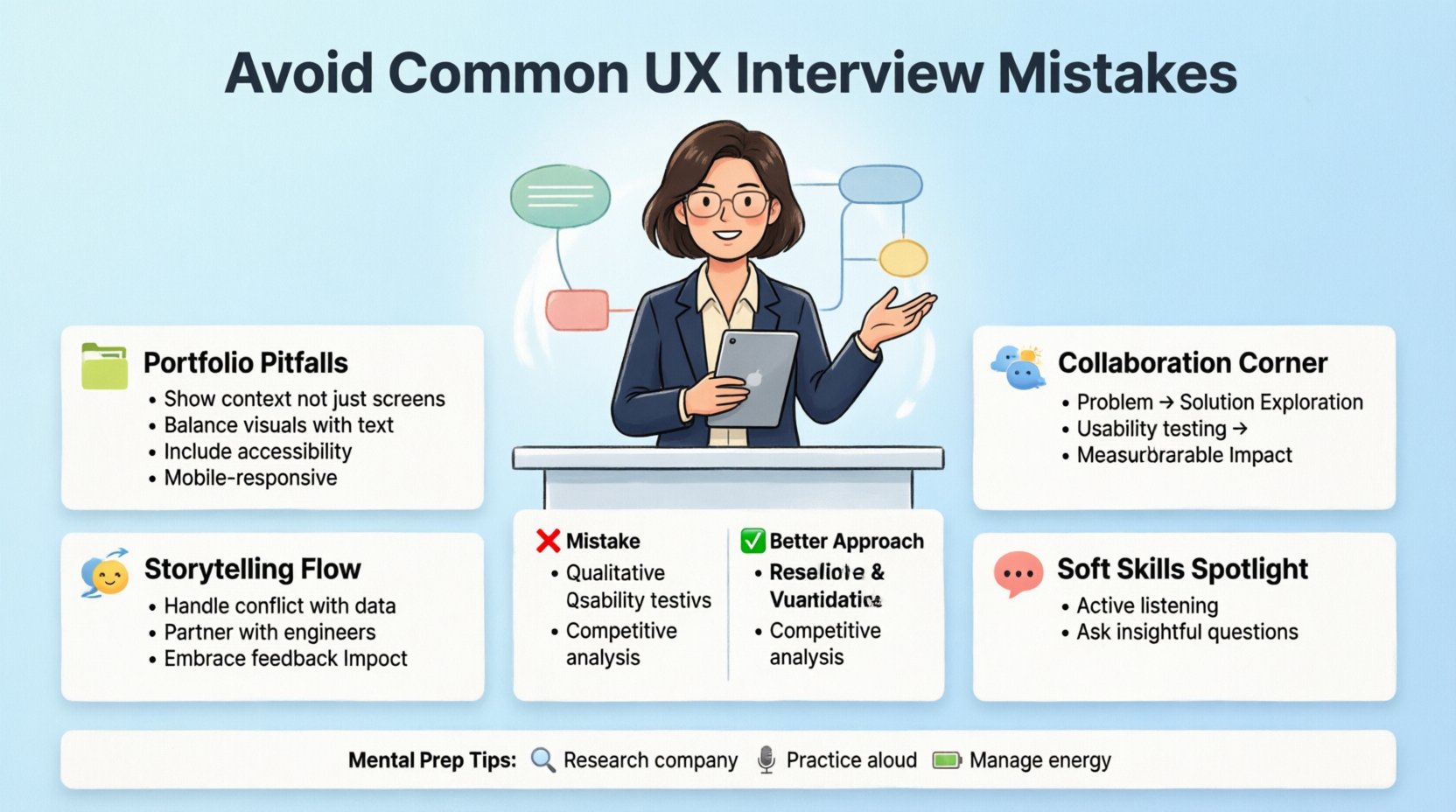
Your portfolio is your first impression. It acts as a tangible proof of your capabilities before you even speak to a recruiter. However, a visually stunning collection of screens often fails to demonstrate the depth of your thinking. Here are the critical errors to avoid when presenting your work.
- Showing Screens Without Context: Recruiters cannot understand the value of a button design if they do not know why it was placed there. Every image should be accompanied by the problem it solved.
- Overloading with Visuals: A wall of high-fidelity mockups can be overwhelming. Balance visual assets with text that explains the rationale.
- Ignoring Accessibility: If your case studies do not mention accessibility considerations, it signals a lack of awareness regarding inclusive design practices.
- Formatting Issues: Ensure your portfolio is responsive and loads quickly on mobile devices. A broken layout suggests a lack of attention to detail.
When curating your work, select projects that show a range of challenges. Do not simply display the final result. Show the journey from research to implementation.
📖 Storytelling in Case Studies
A case study is a narrative, not a report. Many designers treat them like resumes, listing bullet points about what they did. This approach misses the opportunity to engage the interviewer. You need to take them on a journey through your decision-making process.
1. Defining the Problem Clearly
Start by stating the problem you were solving. Was it a drop in conversion rates? Was it high user churn? Did internal stakeholders need better data? A clear problem statement sets the stage for your solution.
2. Exploring the Solution Space
Interviewers want to see how you think, not just what you built. Discuss the alternatives you considered. Why did you reject them? This demonstrates critical thinking and the ability to weigh trade-offs.
3. The Impact of Your Work
Did the design improve metrics? Did it save time for support staff? Did it increase user satisfaction scores? Quantifiable results carry significant weight. If you cannot share specific numbers, describe qualitative feedback you received.
🤝 Collaboration and Process
UX design is rarely a solo endeavor. It involves working with product managers, engineers, marketing teams, and stakeholders. How you handle collaboration is often a deciding factor in hiring.
Handling Conflict
Situations where you disagree with a stakeholder are inevitable. Do not claim you never face conflict. Instead, describe a specific instance where you had a disagreement and how you resolved it. Focus on data and user needs rather than personal opinions.
Working with Engineering
Understanding technical constraints is vital. If you propose a feature that is technically impossible or overly expensive to build, it shows a disconnect from reality. Acknowledge the limitations of the technology and work within them to find creative solutions.
Feedback Loops
Describe how you incorporate feedback. Do you listen defensively or actively? Show that you iterate based on input from others, proving you are adaptable and open to growth.
🧪 Research and Validation
Design decisions should be backed by evidence, not intuition. A common mistake is claiming you “know what users want” without data to support it. Even if you did not conduct formal research, you likely gathered insights through observation or previous data.
- Qualitative vs. Quantitative: Explain when you used each type of data. Surveys give breadth, while interviews give depth.
- Usability Testing: Mention if you tested prototypes. Did you find bugs or confusion? How did you fix them?
- Competitive Analysis: Show that you understand the landscape. Why did you choose a specific pattern? Because competitors use it effectively, or because it solves a gap in the market?
If you lack direct research experience, discuss how you stay updated on industry standards and how you advocate for research within a team.
🗣️ Communication and Soft Skills
Technical skills get you the interview, but communication skills get you the job. You must be able to articulate your ideas clearly and concisely.
Listening Skills
Active listening is crucial. Do not interrupt the interviewer. If you do not understand a question, ask for clarification. It is better to pause and think than to answer incorrectly.
Asking Questions
At the end of the interview, you will be asked if you have questions. Always have a few prepared. This shows genuine interest in the company and the role.
- How does the design team collaborate with product management?
- What are the biggest challenges the team is currently facing?
- How is success measured for this specific role?
📊 Common Mistakes vs. Better Approaches
To help structure your preparation, review the table below. It contrasts common errors with recommended strategies.
| Mistake | Why It Hurts | Better Approach |
|---|---|---|
| Showing only final screens | Hides the thinking process | Show sketches, wireframes, and iterations |
| Saying “I made this” without context | Doesn’t explain value | Explain the “Why” behind every decision |
| Claiming perfection | Seems unrealistic and rigid | Admit failures and what you learned |
| Ignoring business goals | Designs may not be viable | Align design with business objectives |
| Being defensive about feedback | Shows poor collaboration | View feedback as a tool for improvement |
| Not asking questions | Looks uninterested | Prepare insightful questions about the team |
🛠️ Technical and Practical Skills
While you should not mention specific software brands, you must demonstrate proficiency with the concepts behind design tools. Interviewers may ask about your workflow.
Prototyping
Explain how you move from static images to interactive flows. Discuss the fidelity levels you use at different stages. Low-fidelity for testing ideas, high-fidelity for stakeholder presentations.
Design Systems
Have you worked with a design system? Discuss how you contributed to it or how you utilized existing components to maintain consistency. This shows you understand scalability.
Handoff
How do you deliver your work to developers? Mention annotations, specs, and documentation. Clear handoff ensures the design is built correctly.
🧠 Mental Preparation
Interviewing is a performance. The way you carry yourself matters. Nerves are normal, but they should not control your actions.
Research the Company
Before the interview, use their product. Find the bugs. Read their blog posts. Understand their mission. This preparation allows you to speak their language.
Practice Out Loud
Rehearse your case study presentations. Time yourself. Record yourself. This helps identify filler words and pacing issues.
Manage Your Energy
Take breaks between interviews. Do not rush from one call to another. You need to be sharp and engaged for each interaction.
🎯 Final Thoughts
Preparing for a UX interview is an ongoing process. It involves refining your work, understanding the industry, and developing your communication skills. By avoiding the common mistakes outlined in this guide, you position yourself as a thoughtful professional who cares about the user and the business.
Remember, the goal is not to be perfect, but to be clear. Clarity in your thinking translates to clarity in your presentation. When you can articulate the “why” behind your “what,” you become an indispensable part of any team.
Focus on the problems you solve. Focus on the people you serve. If you keep the user at the center of your narrative, you will navigate the interview process with confidence. Good luck with your job search.